“No to Khudoni HPP”

2013

This AI-generated translation may not be completely accurate.
“No to Khudoni HPP”
The idea of building a hydroelectric power plant on the Enguri River in Khaishi, a community in the Mestia municipality, dates back to the 1970s. The planned capacity of the Khudoni Hydropower Plant (HPP) was 704 megawatts, expected to generate 1.5 billion kWh of electricity annually, with a dam height of 202 meters.
In the 1980s, environmental issues became an integral part of Georgia’s growing national movement. Protecting the homeland came to mean not only fighting for independence but also defending its natural and cultural heritage. The country’s first major environmental protest took place in 1987, organized by the “Green Movement” against the construction of the Khudoni HPP and the Transcaucasian Railway project, alongside demands to remove a Soviet military training ground from the David Gareji desert. At the time, part of the hydropower station had already been built, with strong support from both the central Soviet authorities and the Georgian SSR leadership.
On June 30, 1989, the construction of the Khudoni HPP was officially halted. Resolution No. 11 of the Council of Ministers of the Georgian SSR stated that, “Taking into account public opinion and the persistent demands of the population of Mestia, Tsalenjikha, Zugdidi, and Jvari, as well as the wider public of the republic,” construction was suspended, and measures were to be taken to mitigate any resulting negative consequences.
The issue resurfaced in April 2011, when Prime Minister Nika Gilauri announced during a government meeting that “the matter is practically settled, and an agreement with the company Trans Electrica Ltd on the construction of the Khudoni HPP will be signed in the coming days.”
Discussion continued after the Georgian Dream government came to power. In April 2013, an international team of experts presented the results of an environmental impact assessment (EIA) on the project. The report identified two major issues: the absence of a clear national energy policy and the lack of a water management plan for the Enguri River basin. Other challenges included poor road access to Svaneti — at the time, only one narrow road led to the region, where even a minor accident could halt all construction activity.
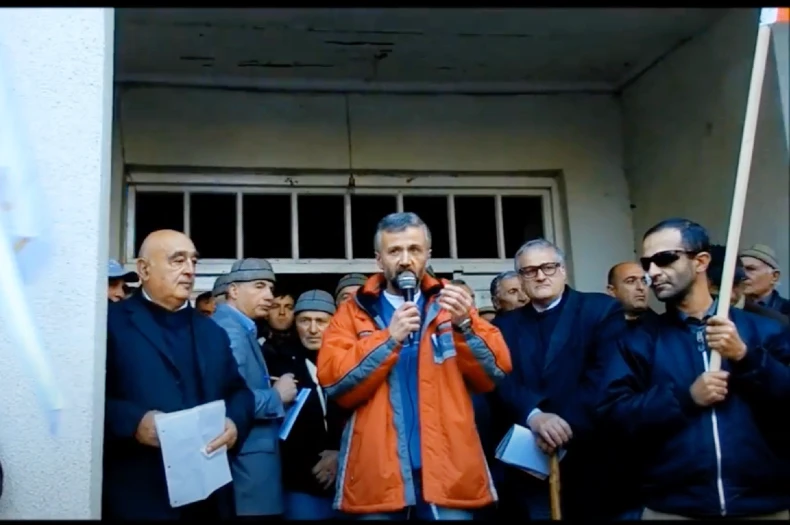
In September 2013, more than 70 families took an oath to peacefully resist the construction of the hydropower plant and to “spare no strength or wisdom” to prevent the submergence of the active Church of Saint George in Khaishi, local cemeteries, and nearby villages. Residents protested against the expected flooding of their lands and the compensation offered, holding a demonstration on September 17, 2013, in the village of Khaishi.
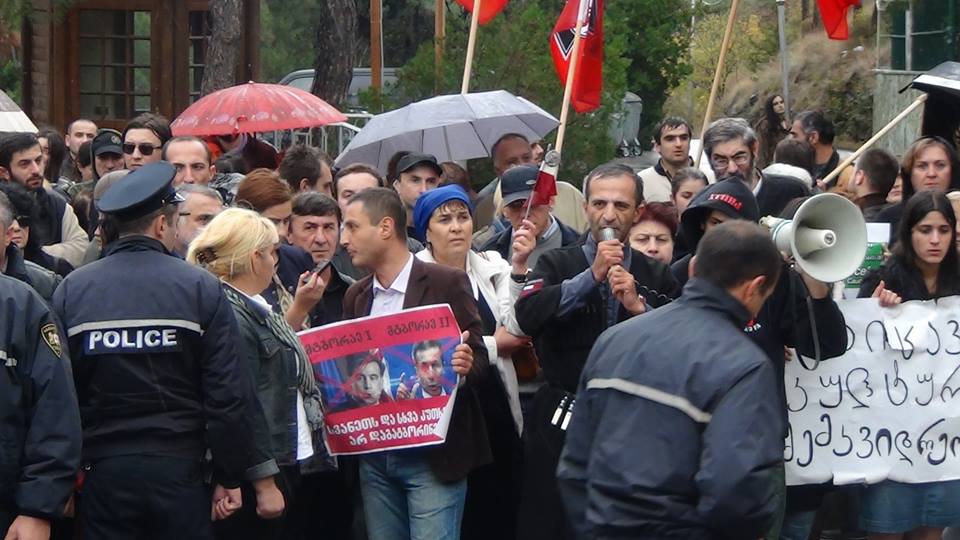
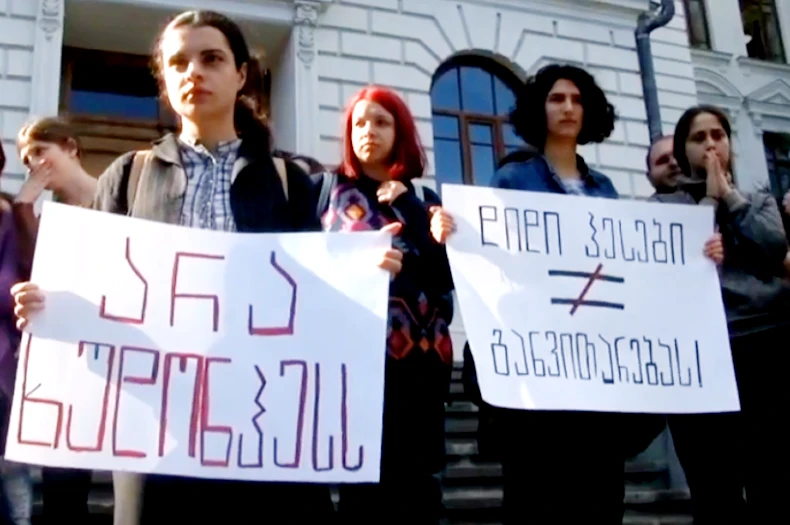
On October 4, students organized a “No to Khudoni HPP” protest in the courtyard of Tbilisi State University’s first building, followed by another rally on October 26 in front of the Ministry of Energy. Additional demonstrations took place in Tbilisi near the Government Administration and the residence of then–Prime Minister Bidzina Ivanishvili.
Protests also continued in Khaishi. One of the largest rallies was held on November 3, 2013, when residents once again swore to prevent the project’s implementation. They repeated this oath on January 20, 2014. Later that month, on January 29, locals learned that specialists were arriving to measure the territory for construction. In response, they blocked the Jvari–Mestia road with large stones for three hours, preventing the specialists from carrying out their work.
Another major protest in Khaishi took place on February 20, 2014. On April 23, the TV channel Maestro reported that the construction company was expected to receive its official permit on March 1, though Energy Minister Kakha Kaladze stated that the issue was still under review.
Even though the project had been suspended, villagers remained concerned. On May 20, 2018, residents organized another rally in the center of Khaishi, expressing fears that construction might resume and demanding its permanent cancellation.
On December 19, 2022, media outlets reported that the Georgian government had paid the investor $14.5 million to reclaim ownership of the Khudoni HPP project. A year later, on December 18, 2023, Prime Minister Irakli Garibashvili announced that the state intended to build the hydropower plant itself, though no further details were disclosed.