Against the demolition of the Dinamo Courts

2010

This AI-generated translation may not be completely accurate.
Against the demolition of the Dinamo Courts
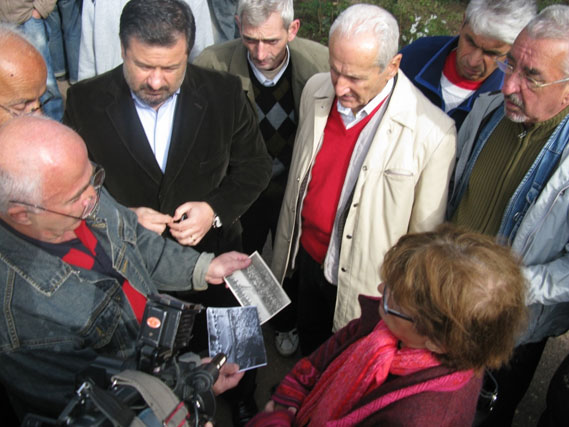
In Tbilisi, on the riverbank where the House of Justice now stands, there once was the tennis club Dinamo — known to locals simply as the Dinamo Courts. On November 1, 2010, the club’s administration invited journalists to share information about the possible demolition of the courts. According to the administration, a representative of the Ministry of Economy had ordered them on October 25 to vacate the premises by November 1. The area contained twelve outdoor summer courts and two indoor halls where coaches trained students during the winter.
The Ministry of Economy later explained that the tennis club’s management had sold the land years earlier to Caucasus Real Estate Group, which subsequently sold it back to the state.
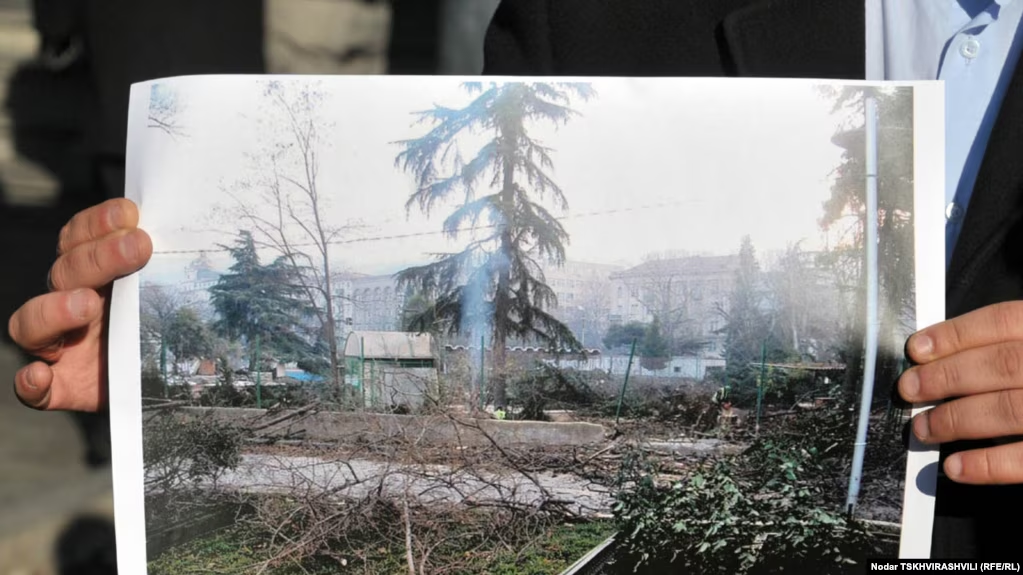
Soon afterward, the trees on the site were cut down and the land was cleared for construction. Dinamo’s training facilities were temporarily relocated to Ortachala. “They kicked us out and treated us like criminals. The next morning, when we came back, the door was completely sealed,” recalled one of the Dinamo Courts coaches, Tea Muchaidze.
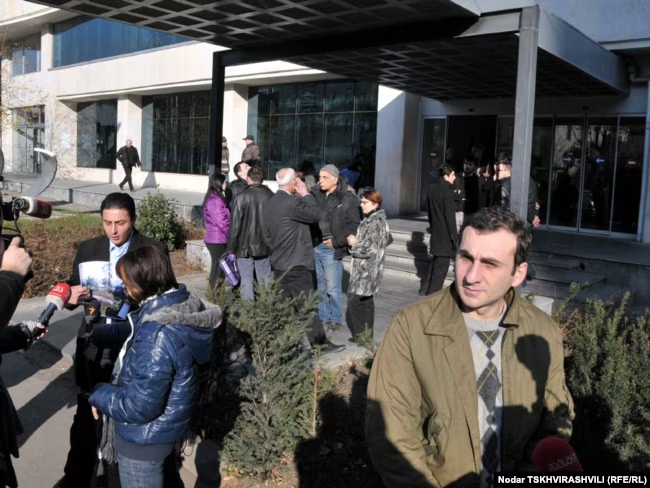
The destruction of this recreational area drew protests from non-governmental organizations and several political parties. On December 22, 2010, they gathered in front of Tbilisi City Hall to protest the demolition of the Dinamo Courts. Alexander Elisashvili, a representative of Tpilisis Hamkari (Tbilisi Guild), said that the area’s recreational status had been revoked and that 180 trees had been cut down. “Why must a building be constructed here — and specifically, as I’ve heard, the Public Registry building, which was initially planned for Ortachala?” Elisashvili asked.
According to Giorgi Chanashvili, a representative of the Ministry of Sports and Youth Affairs press office, a modern tennis complex was to be built in exchange for the lost Dinamo Courts at the Olimpiki swimming pool site. The new complex, planned for completion by summer 2011, was to include three indoor and nine outdoor courts equipped with state-of-the-art facilities.
Ultimately, the House of Justice was constructed on the former site of the Dinamo Courts.