Demonstration of 12th-graders

2010

This AI-generated translation may not be completely accurate.
Demonstration of 12th-graders
In March 2010, Georgia’s Ministry of Education approved the exam programs for the 2010–2011 academic year, requiring 12th-grade students to take eight graduation exams. According to Education Minister Dimitri Shashkin, the new computer-based “CAT system” would provide a more objective assessment of students’ knowledge.
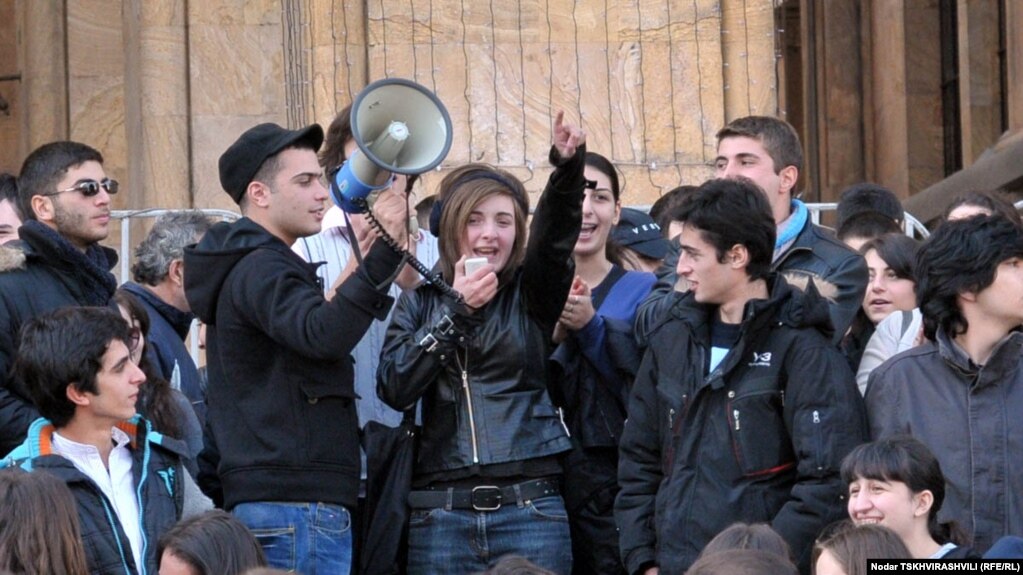
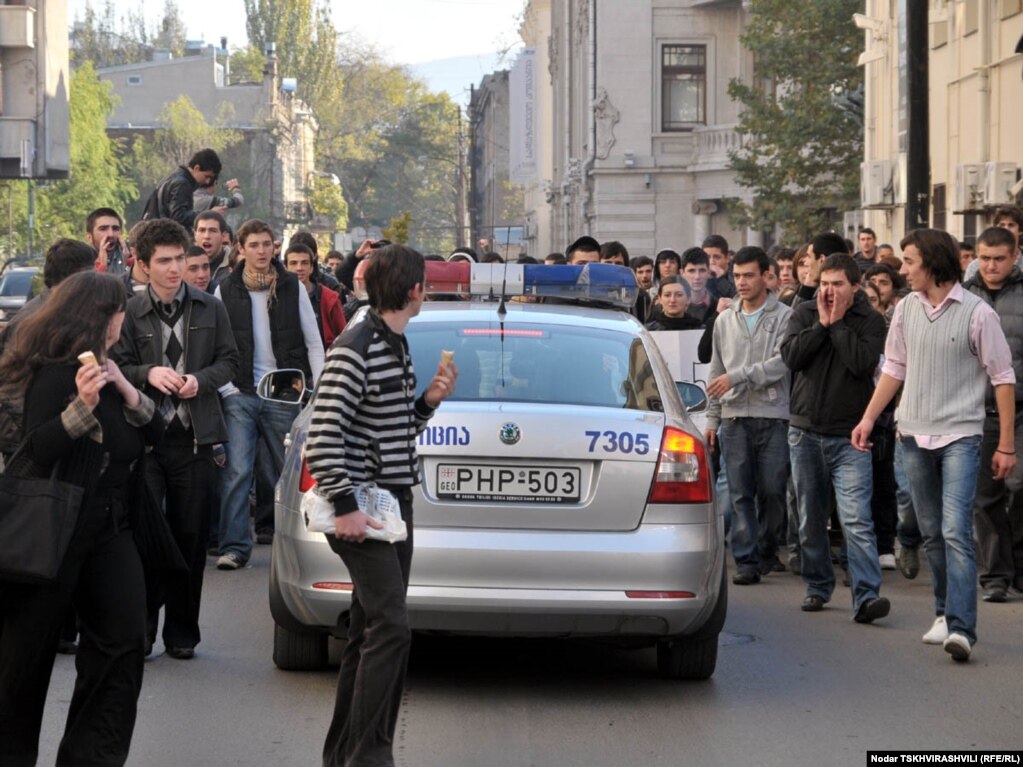
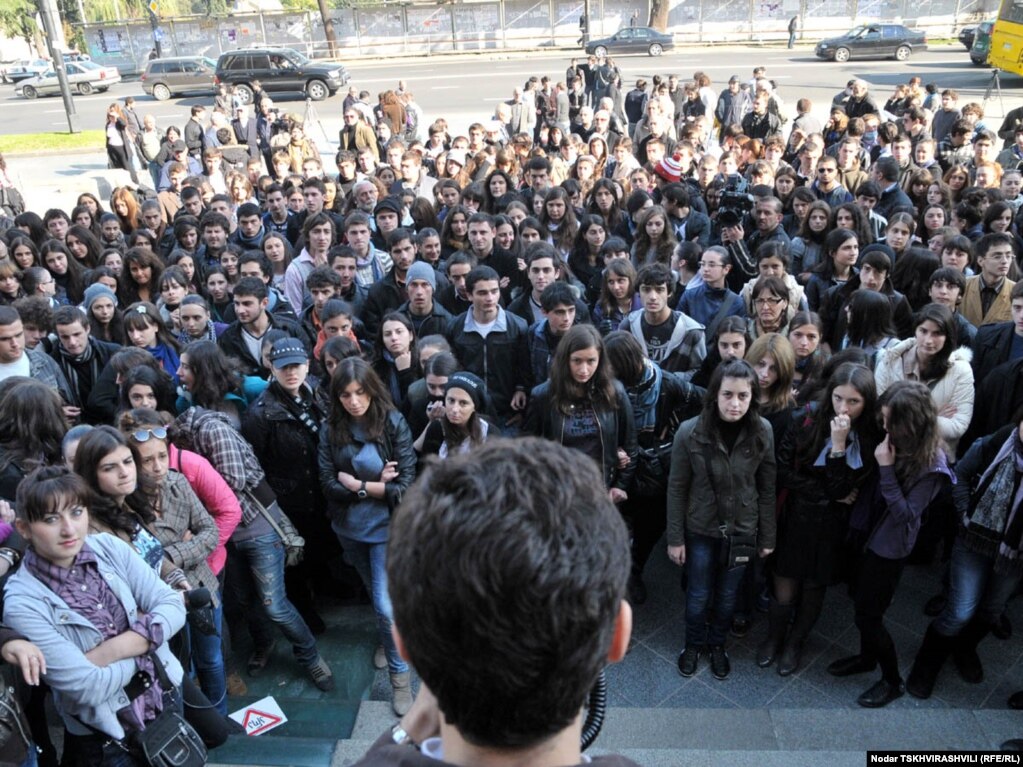
Students first protested the decision on November 5, and on November 9, the demonstrations grew larger as 12th graders marched from the Ministry of Education to the Parliament building.
The students argued that they had studied natural science subjects for only one semester and therefore lacked the knowledge needed to pass the exams. “Later they said the semester-based teaching system was a mistake, but we went through that system and didn’t really learn anything. They used to tell us physics and chemistry wouldn’t matter and that we’d still pass the national exams, but suddenly it turns out we need those subjects — even though we were never properly taught them,” said some of the students.
Gathered in front of Parliament, the students did not demand the complete cancellation of graduation exams, but rather the elimination of exams in subjects they had not studied thoroughly in recent years.
President Mikheil Saakashvili responded to the protests by saying: “If you don’t want to take exams, then don’t. Go pick up a shovel or a hoe — there’s nothing shameful about earning a living through hard work… And yes, Shashkin has nerves strong enough to handle you straight-F students trying to start a revolution.”
That same night, on November 9, Georgian news agencies reported that eight public school principals had been dismissed. According to the reports, their dismissal was linked to the student protests against the new graduation exam system. Maya Giorgadze, director of Tbilisi Public School No. 149, said that the principals had been summoned to the Ministry of Education, taken one by one to the office of the head of the General Inspection Department, and told to write letters of resignation. Giorgadze was among those who refused to sign.
Minister Shashkin denied that the dismissals had been ordered by the ministry, claiming instead that the principals had personally asked their school boards to release them from duty.
On November 12, an inspection began at Public School No. 149, after which Maya Giorgadze fell ill and was hospitalized.
The students planned another protest for November 19, which was supposed to bring together hundreds of 12th graders from 70 schools. However, only three students showed up at Parliament. One of them, Ani Muskhelishvili, told Interpressnews that the protest had been suppressed through intimidation and threats. According to her, school principals and teachers had warned students daily that participating in demonstrations would lead to expulsion and loss of the right to receive their graduation certificates.