Protests in Georgia After the 2024 Parliamentary Elections

2024

This AI-generated translation may not be completely accurate.
Protests in Georgia After the 2024 Parliamentary Elections
After the large-scale protests sparked by the adoption of the so-called “Russian law,” civil society approached the parliamentary elections scheduled for 26 October 2024 with great anticipation. Protesters hoped they would be able to change the government through the elections. After the polling stations closed, exit polls published on television channels critical of the government showed the opposition winning. Opposition celebrations were being broadcast live. Soon after, however, the Central Election Commission released opposite results. According to the preliminary count, the ruling party, Georgian Dream, was winning. The opposition declared the results fraudulent, began gathering specific evidence, and simultaneously called on people to take to the streets.
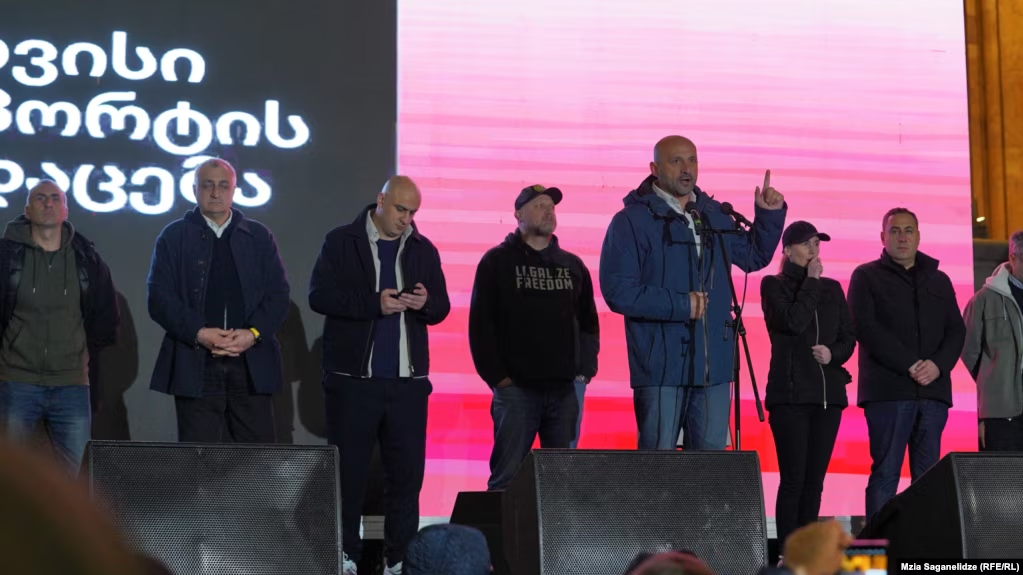
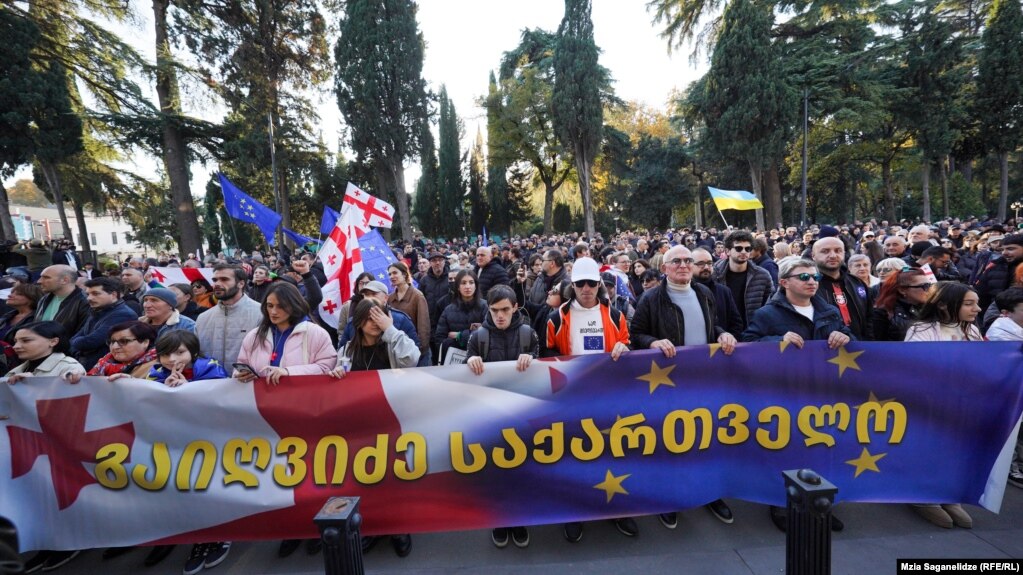
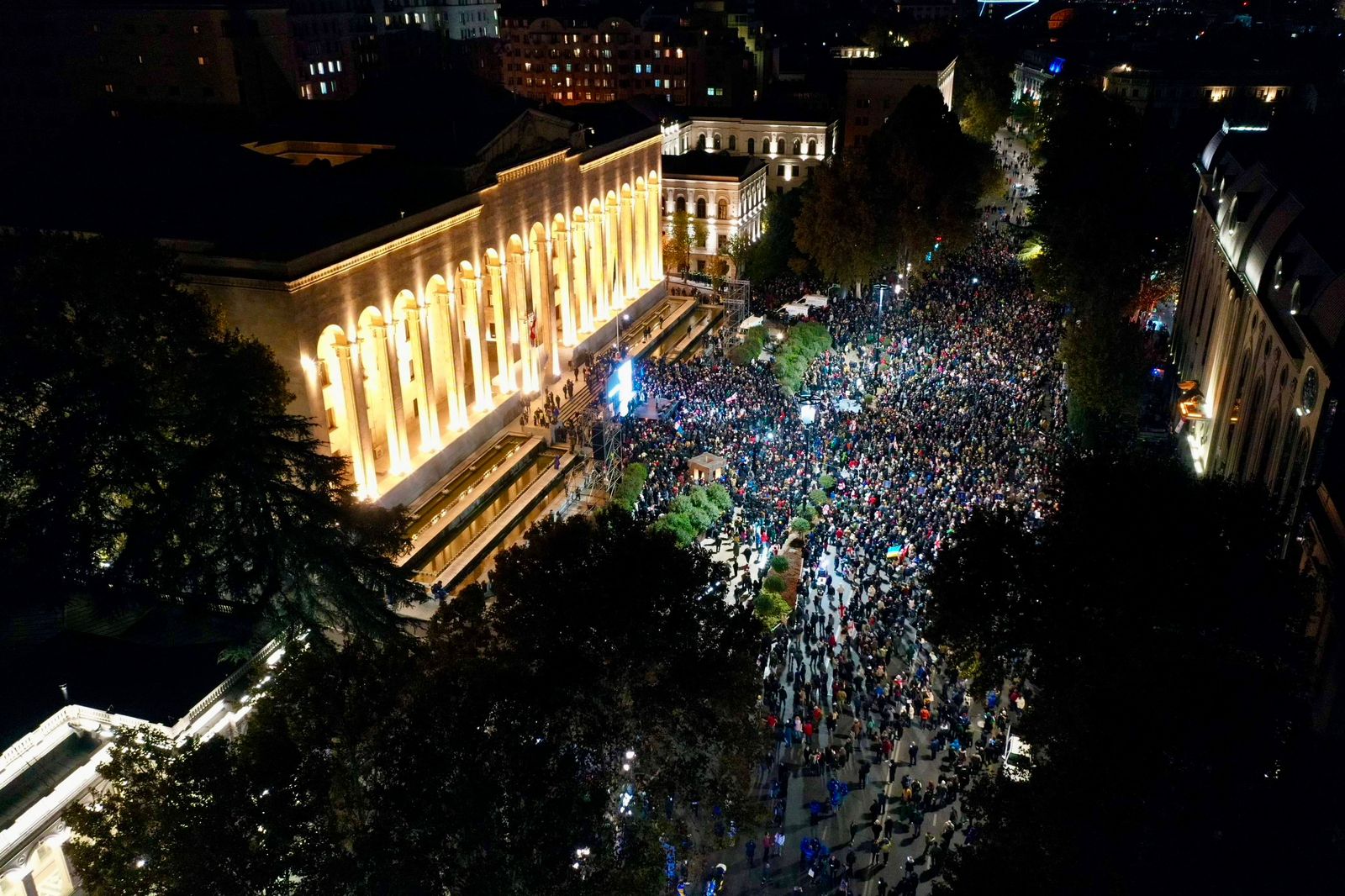
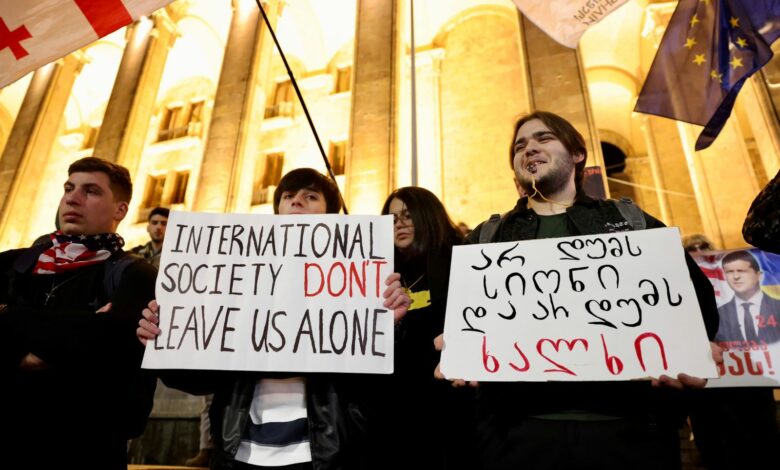
On 28 October, the first post-election demonstration was held on Rustaveli Avenue. That same day, opposition parties told the gathered crowd that they did not recognize the results and would not enter parliament. The opposition demanded new elections. On 28 October, the President of Georgia also called on the public to gather in front of parliament to express their position on the illegitimacy of the elections. However, the number of people on Rustaveli Avenue was significantly smaller than the spring protests against the “Russian law.”
On 2 November, TV Pirveli aired a journalistic investigation on the program Nodar Meladze’s Saturday, which revealed the various methods Georgian Dream used to obtain and falsify votes. Political parties and members of civil society also published relevant evidence.
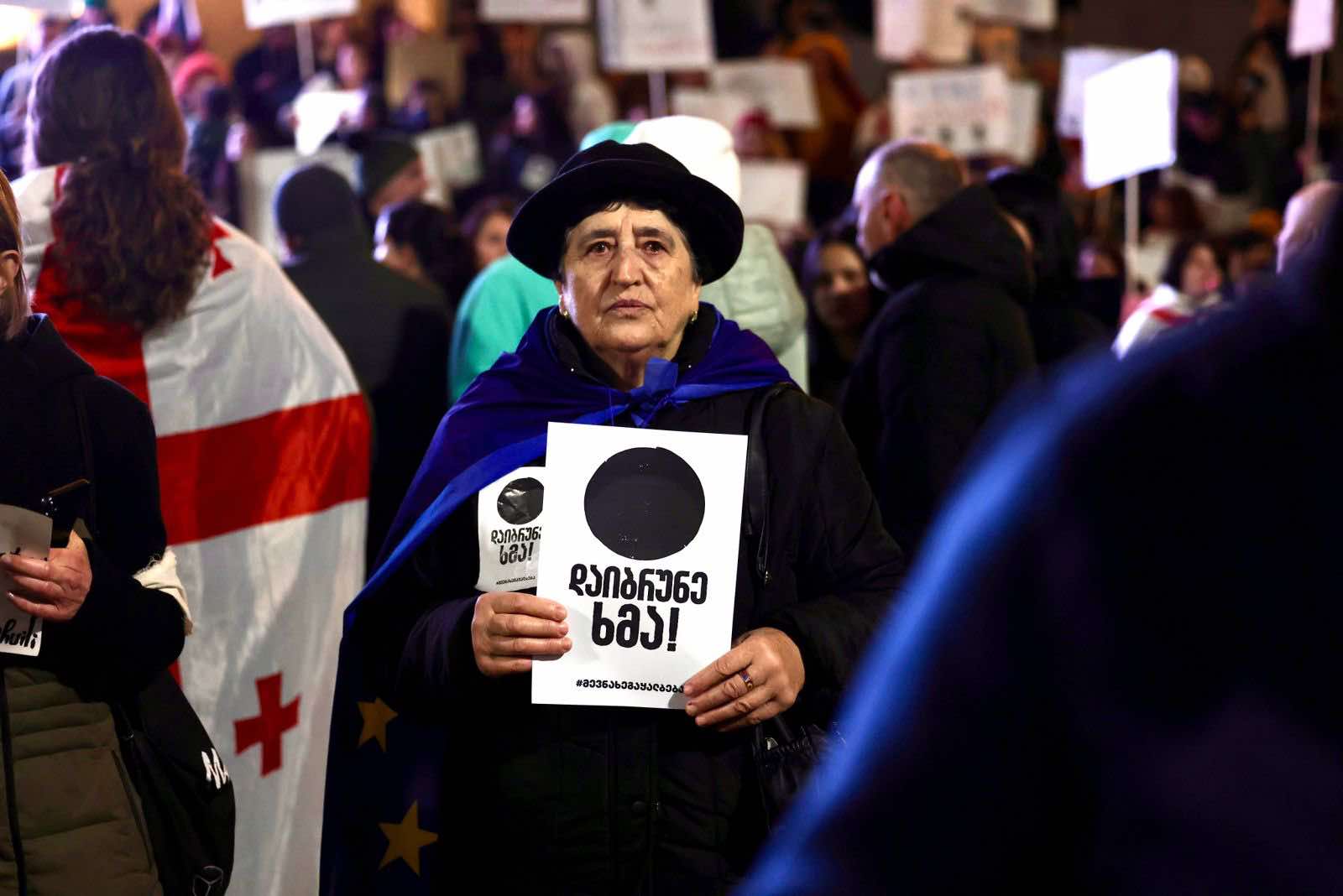
Lawsuits were filed in court, including regarding the violation of ballot secrecy, as civil society argued that when placing the ballot inside electronic voting machines, it was possible to see which candidate had been marked because the ink bled through to the back. Because of this, the symbol of the protests became a black “leaked” dot on a white background.
On 4 November, Vladimir Khuchua, a judge of the Tetritskaro District Court, confirmed the violation of ballot secrecy, thereby satisfying the claim of the Young Lawyers’ Association. This was an exceptional case. His decision was later annulled by the Court of Appeals.
That same evening, opposition parties told those gathered in front of parliament that they would work in three directions: gathering information about electoral fraud, informing the international community so that democratic countries would not recognize the elections, and supporting civil resistance, which was visible at the protests.
At the end of the evening, the crowd dispersed, and politicians announced the next gathering for 2 p.m. the following day at the Sports Palace. However, the next day the plan changed: people were called to gather at 3 p.m. at the Court of Appeals, where hearings on NGO complaints about precinct annulments had been scheduled. By the time the protest’s time and location had already changed, the hearing was canceled.
In the following days, protests were held daily in various locations. On 9 November, one part of the opposition gathered at Marjanishvili Square together with the “Strong Georgia” coalition, while another group gathered at the University Metro Station, led by the “Coalition for Change.” Both marches converged at Heroes’ Square.
On 11 November, the chairs of the foreign affairs committees of the parliaments of Germany, Finland, Sweden, France, Lithuania, Latvia, Estonia, and Poland—who were in Tbilisi—visited the protest taking place outside parliament.
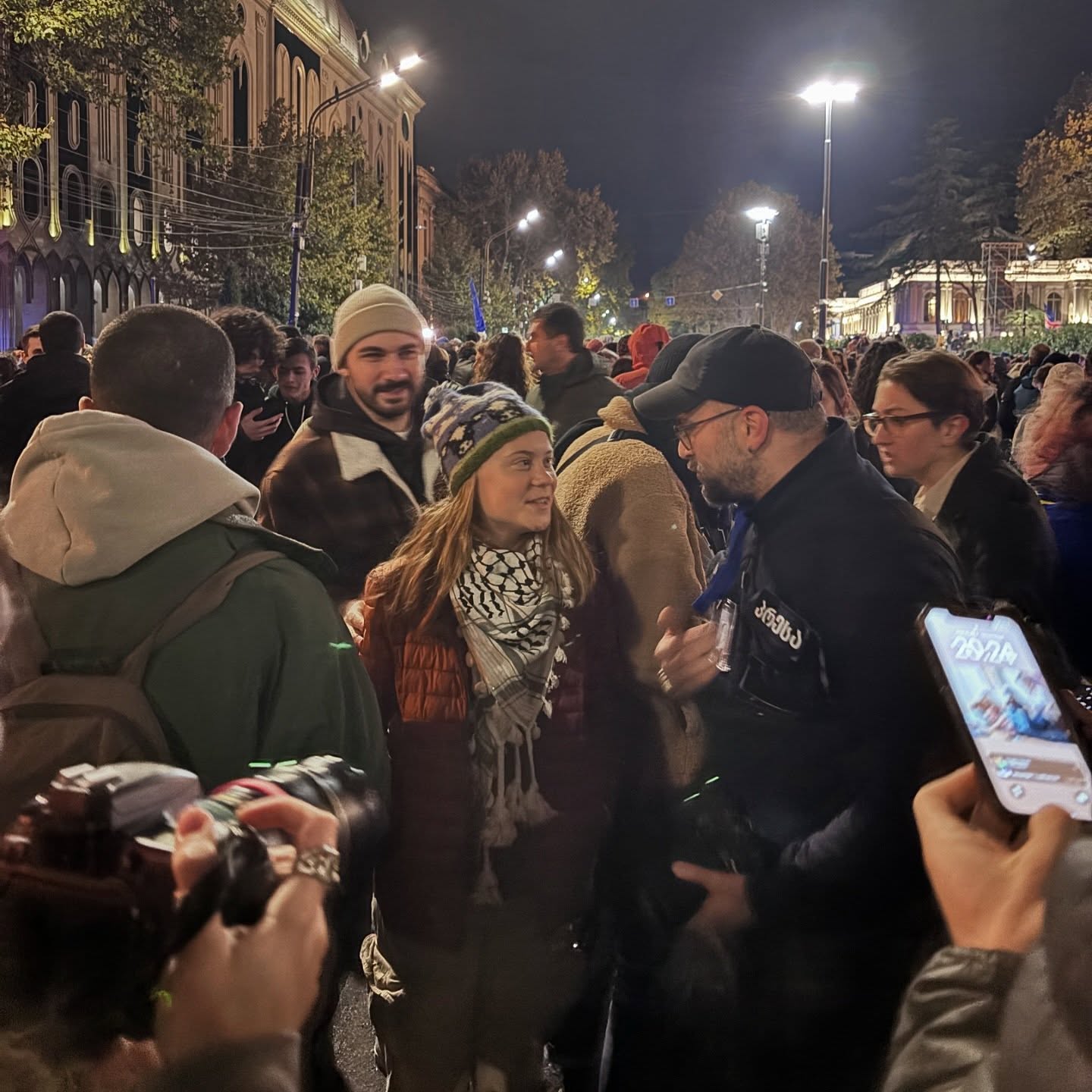
That same day, Swedish environmental activist Greta Thunberg also appeared at the protest. She had come to protest the hosting of the international climate conference in Baku. Thunberg held a demonstration on Freedom Square and then joined the citizens on Rustaveli Avenue calling for new elections.
Starting on 14 November, students of Batumi State University began protesting election fraud inside the university building. Their protest banners read: “We will not accept this,” and “Vote thieves stole our future too.” Similarly, students at Ilia State University in Tbilisi and at Zugdidi’s Shota Meskhia State University stayed inside their buildings overnight. Together with students from other universities, they published a manifesto stating that they did not recognize the election results.
On 16 November, the Central Election Commission approved the final protocol of the 26 October parliamentary elections. According to it, Georgian Dream received 53.93% of the vote and won 89 seats in parliament.
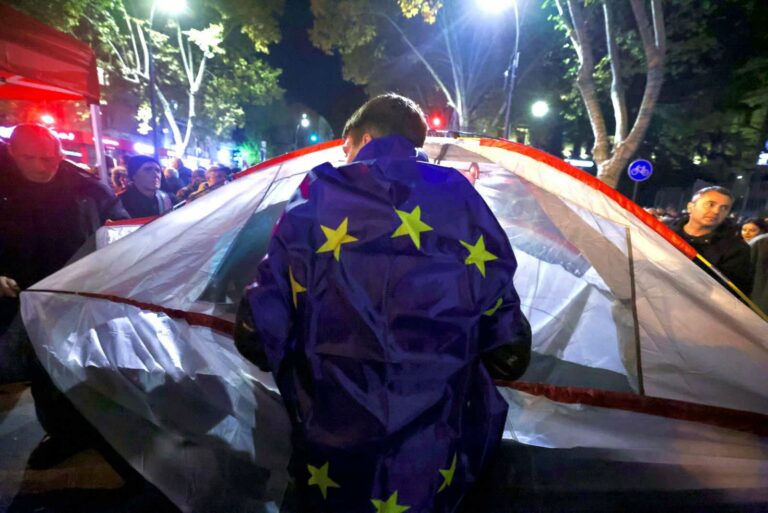
The next evening, members of the “Coalition for Change,” together with the United National Movement, organized a march. It began in Vake Park and stopped at the first building of Tbilisi State University (TSU). Leaders Nika Gvaramia and Giorgi Vashadze announced that they would remain at the intersection of Varazis Khidi and Chavchavadze Avenue and camp there overnight. Tents were set up, and traffic in the surrounding streets was restricted. A large banner reading “Let’s take freedom into our own hands” was hung on the fence of TSU’s first building. They spent the night in tents and by bonfires lit on the road.
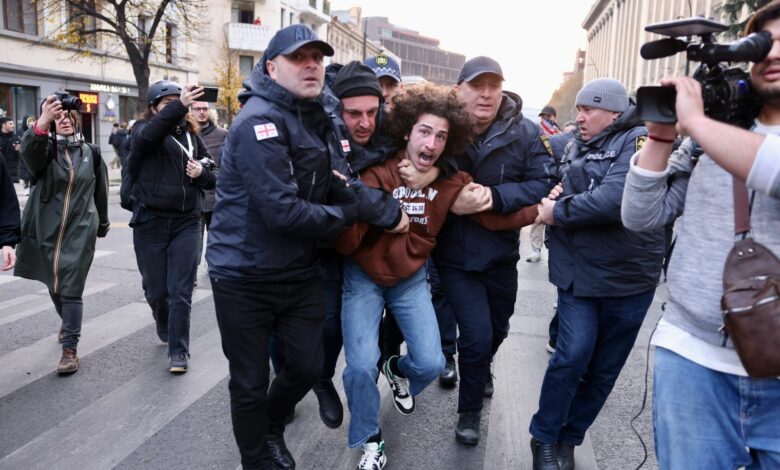
The second night was not as peaceful. Citizens recorded footage showing how special forces were let into the TSU building, from where they came out toward the protesters and, at dawn on 19 November, dispersed the crowd—removing tents and detaining demonstrators. According to the Ministry of Internal Affairs, 16 people were detained. Among them was 21-year-old Mate Devizde, who was initially detained on administrative charges and, when he was supposed to be released from the detention facility on 21 November, was instead charged with a criminal offense—alleged assault on a police officer—despite a lack of supporting evidence. Nonetheless, on 12 June 2025, Mate Devizde was sentenced to 4 years and 6 months in prison.
Those detained on 19 November reported that law enforcement officers continued to subject them to physical and verbal abuse after their arrest.
On 20 November, at around 6 a.m., police again forcibly removed protesters who had returned to the university area, pushing them from Chavchavadze Avenue to Melikishvili Avenue. By 8 a.m., Zurab Japaridze, one of the leaders of the “Coalition for Change,” told the gathered crowd that they had decided to disperse temporarily and develop a new plan.
That same day, some students managed to enter TSU’s first building. They said they would not leave until their demand for the resignation of the rector, Jaba Samushia, was met. They raised this demand after information spread that special forces had entered the university courtyard early on 19 November.
Meanwhile, outside, near TSU’s first building, the opposition protest demanding new elections continued. Protesters set up tents again and planned to stay overnight.
By 22 November, students remained in the courtyard of TSU’s first building and in Auditorium 023. They were demanding, on one hand, the resignation of the university’s rector, Jaba Samushia, and on the other, the release of detained activists, including Mate Devizde.
Isako Devizde, detained on 19 November, began a dry hunger strike in the detention facility. On 23 November, he was taken to a clinic. His eight-day administrative detention expired on 27 November, after which he was released.
On 23 November, a protest organized by opposition parties moved from TSU’s first building to Heroes’ Square. There, they announced that in the coming days they would present their action plan to the public. What that plan was and what results the scattered protests were meant to achieve remained unclear to those gathered. The protests were no longer as large as they had been in late October and early November.
On 25 November, a parliamentary session was held attended only by members of Georgian Dream, while on Rustaveli Avenue protesters continued their demonstration. President Salome Zurabishvili released a video statement saying that the ruling party, Georgian Dream, had “torn up the constitution.”
This is how the opposition arrived at 28 November 2024, when that day the newly appointed Prime Minister, Irakli Kobakhidze, announced that the Georgian government was refusing to open EU accession talks until the end of 2028. This statement reignited the fading protest energy, and large-scale demonstrations and resistance began again that same evening, just a few hours after the announcement.