Demonstration of war veterans

2010

This AI-generated translation may not be completely accurate.
Demonstration of war veterans
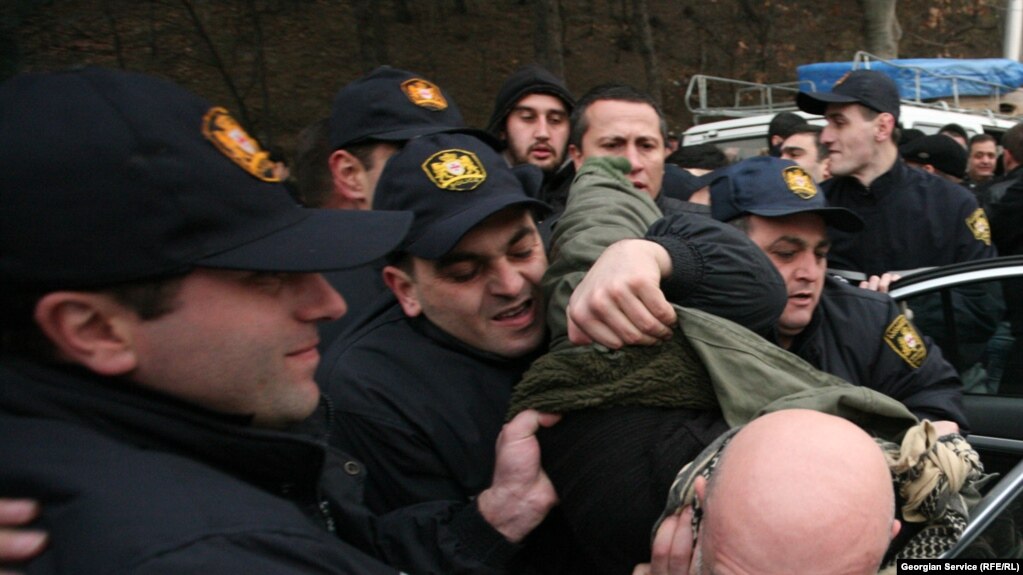
On December 27, 2010, veterans who had fought for Georgia’s territorial integrity began a hunger strike at the Heroes Square memorial to protest their harsh social conditions. They demanded employment opportunities and what they described as “basic attention” from the government. The protest soon expanded as several opposition parties and civic movements expressed support. At that time, war veterans received minimal state benefits — a 22-lari voucher for utility bills and a transportation card available only to veterans living in Tbilisi.
The veterans planned to continue their hunger strike until January 6, 2011, after which they intended to launch broader, long-term protests. However, on January 3, police dispersed the protest and detained several participants. On January 4, the Ministry of Internal Affairs confirmed that 11 people had been arrested, stating that they “refused to comply with patrol police officers’ orders to remove the tent, resisted physically, and verbally insulted the officers.” The ministry also reported that a drug and alcohol test had confirmed intoxication in two detainees.
On the same day, a court fined all 11 detained veterans 400 GEL each. Another rally was planned that day at Heroes Square in solidarity with the veterans, but law enforcement officers blocked the area with a “human chain,” preventing demonstrators from gathering.
Tamar Chugoshvili, head of the Georgian Young Lawyers’ Association (GYLA), stated that Judge Tadashvili imposed the fines based solely on police reports. Public Defender Giorgi Tugushi also issued a statement noting that uniformed and plainclothes officers had physically and verbally abused protesters, despite there being no evidence of unlawful behavior from the demonstrators.
The detained veterans later appealed to the appellate court to overturn the fines.