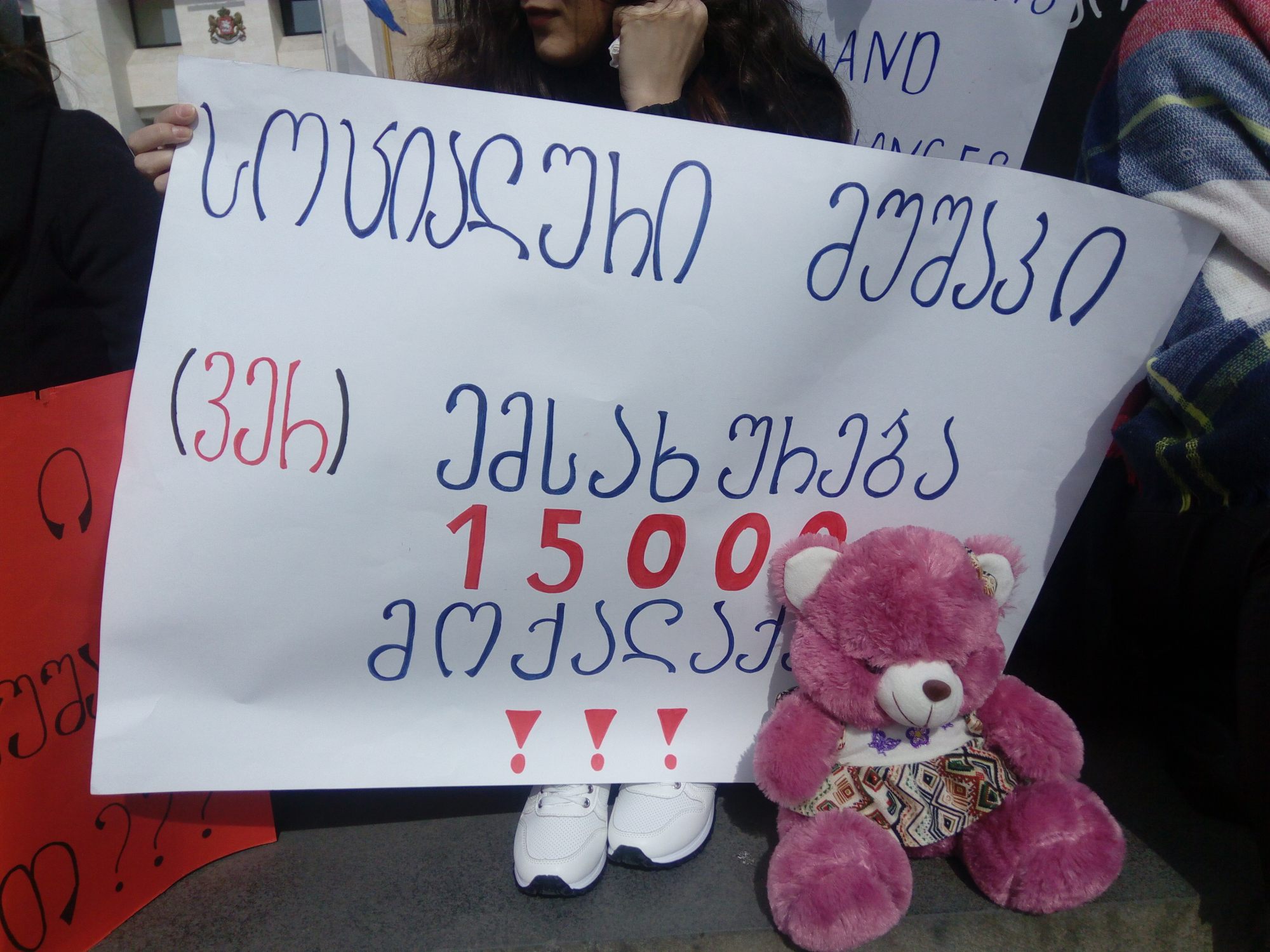
Demonstration of Social Workers

2019

This AI-generated translation may not be completely accurate.
Demonstration of Social Workers
On March 25, 2019, social workers serving the elderly, children, and women victims of violence went on strike across Georgia, demanding better working conditions. In Tbilisi, they gathered in front of the Government Administration to present their demands to the public.
The strike followed a month-and-a-half-long mediation process that began in February. On February 8, they sent a written appeal to the Ministry of Health outlining their demands and held a rally outside the ministry the same day.
At that time, senior social workers earned a gross salary of 1,000 GEL (about 768 GEL net), and regular social workers earned 800 GEL (about 614 GEL net). They were overworked and had to cover transportation costs out of pocket.
On March 27, 2019, Health Minister Davit Sergeenko admitted that the ministry had “missed the moment,” acknowledging that social workers had been working under extremely difficult conditions. Prime Minister Mamuka Bakhtadze also addressed the issue on March 28 during a government session.
On April 2, social workers announced they were ending the strike and returning to work after receiving assurances that their conditions would improve. They were promised reduced workloads, access to vehicles and taxi services, the addition of legal staff, and infrastructural improvements to their workplaces. However, no agreement was reached on salary increases.
A year later, on February 1, 2020, around 30 social workers across Georgia were dismissed from their positions.