Demonstration of Auditorium 115

2016

This AI-generated translation may not be completely accurate.
Demonstration of Auditorium 115
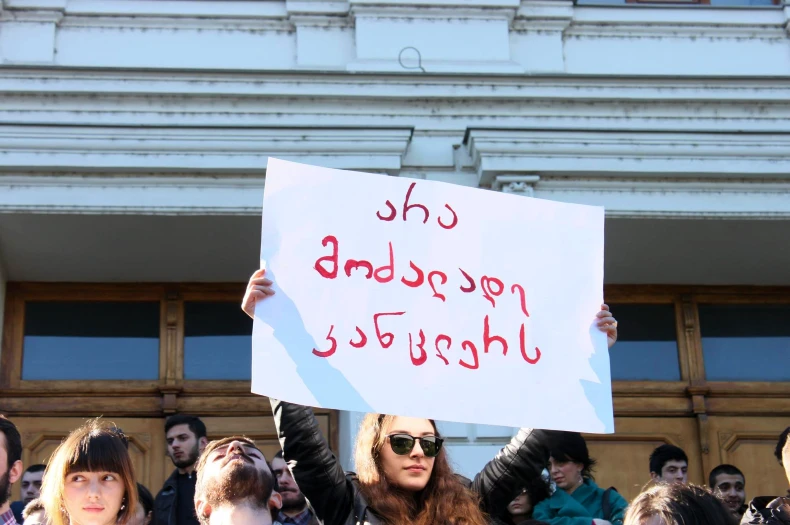
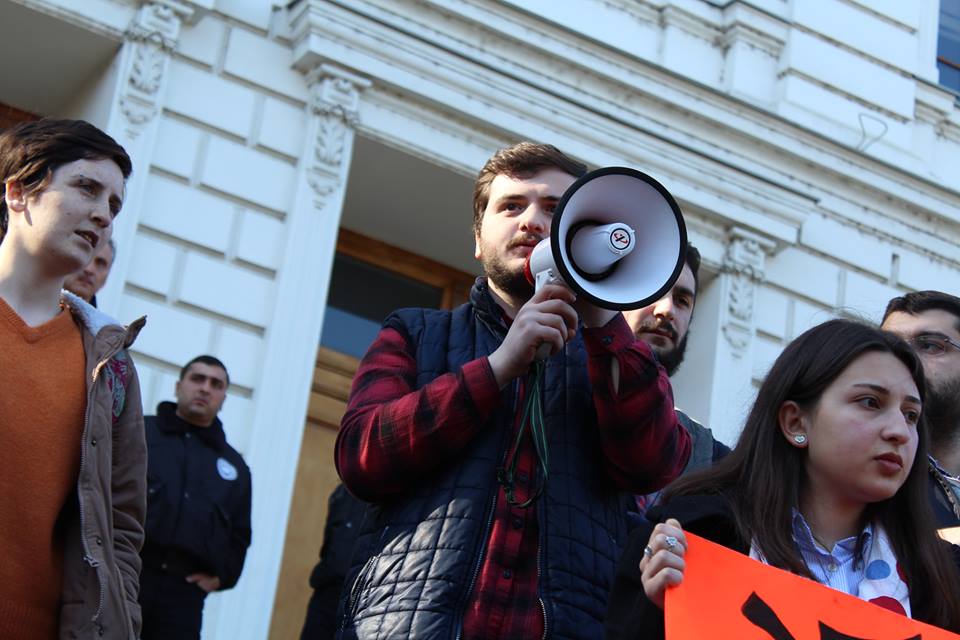
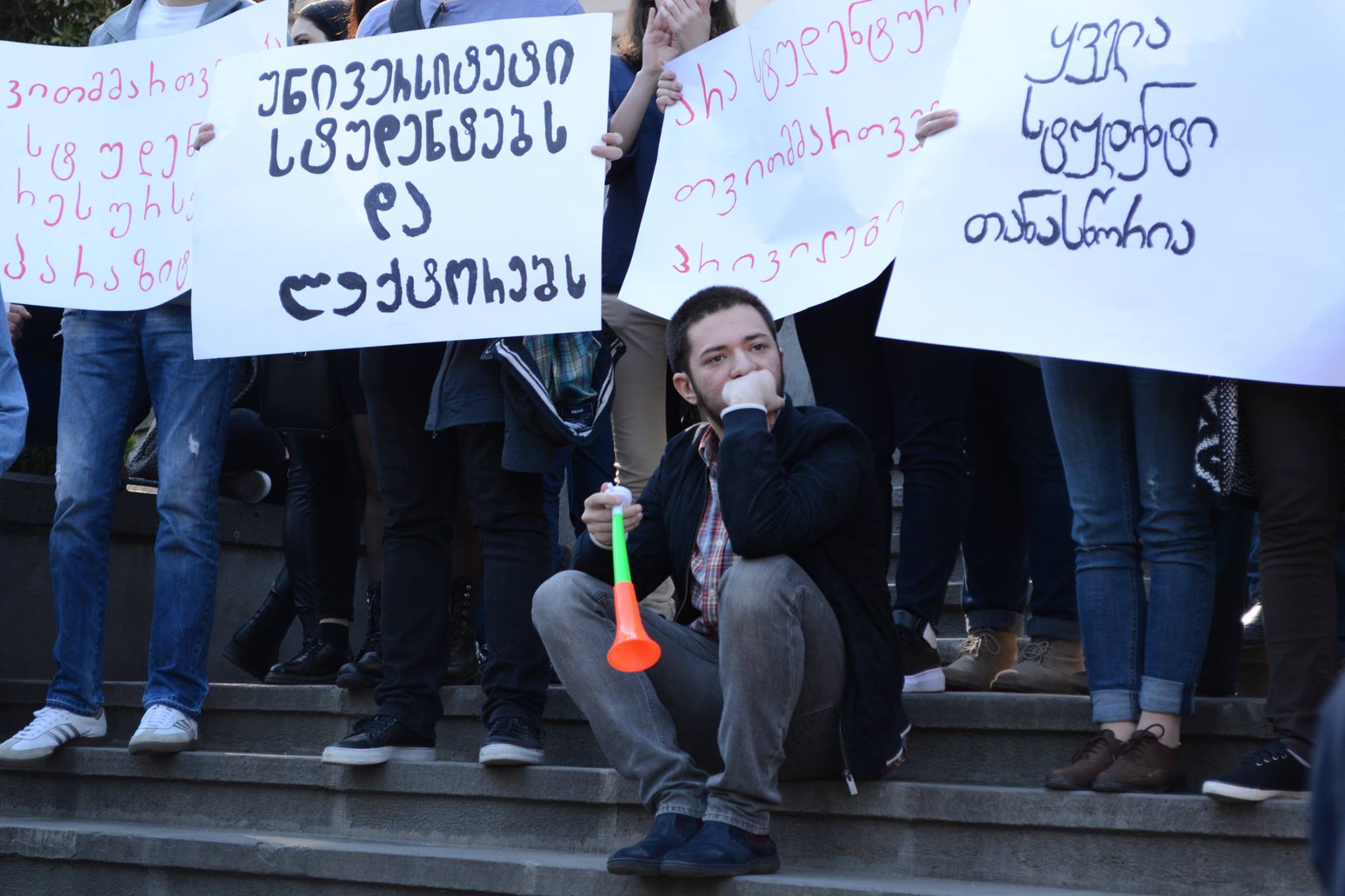
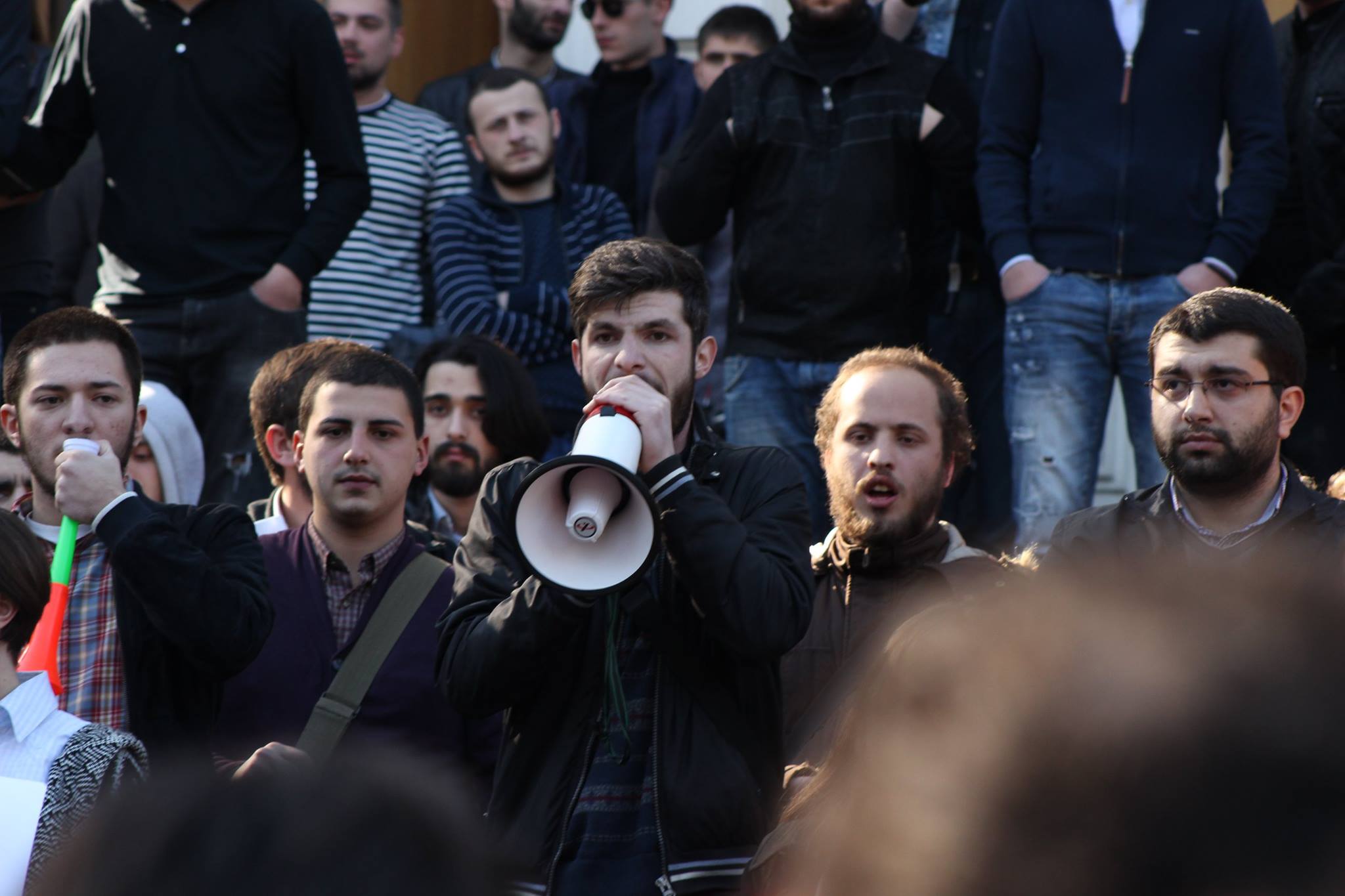
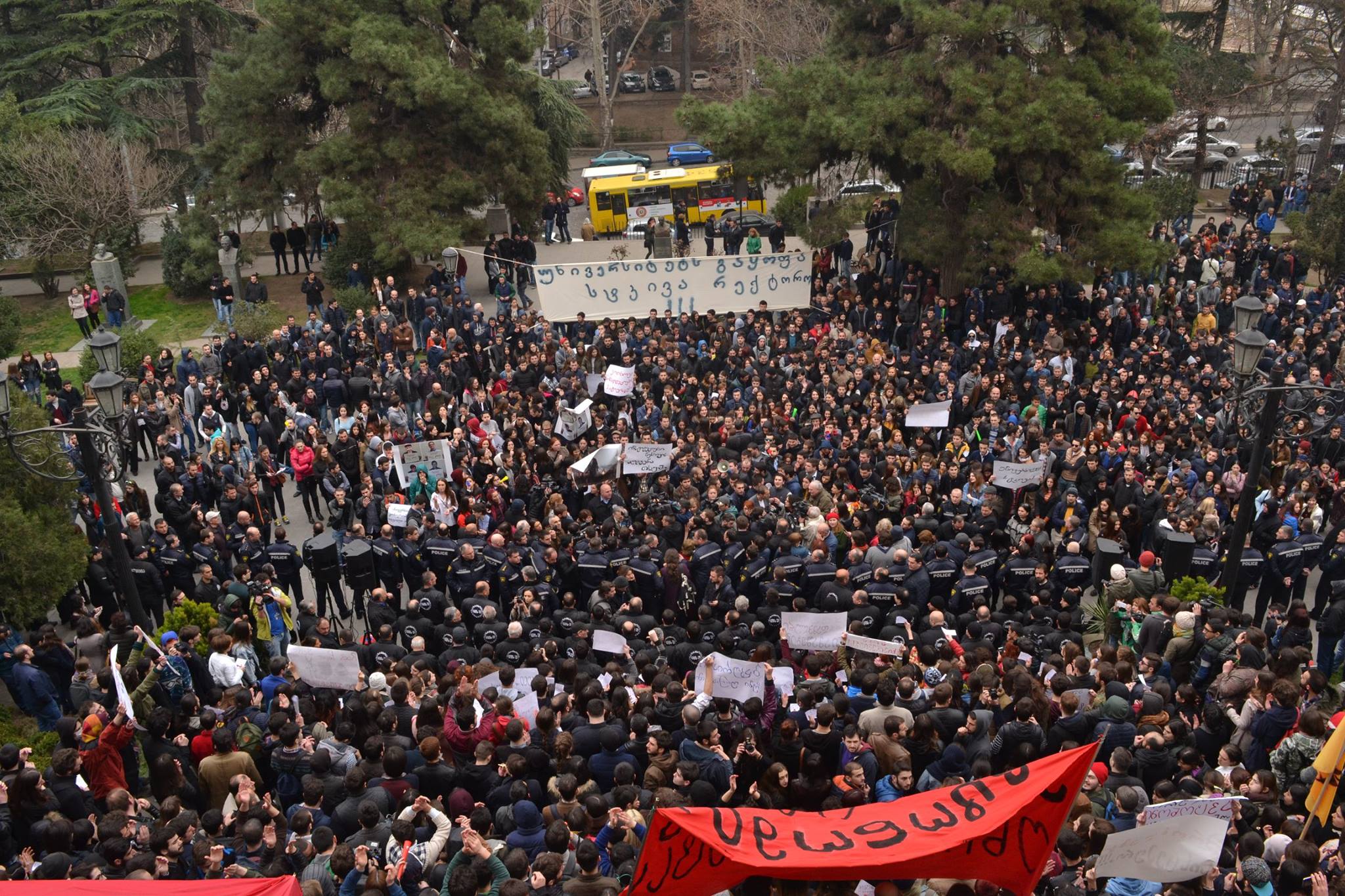
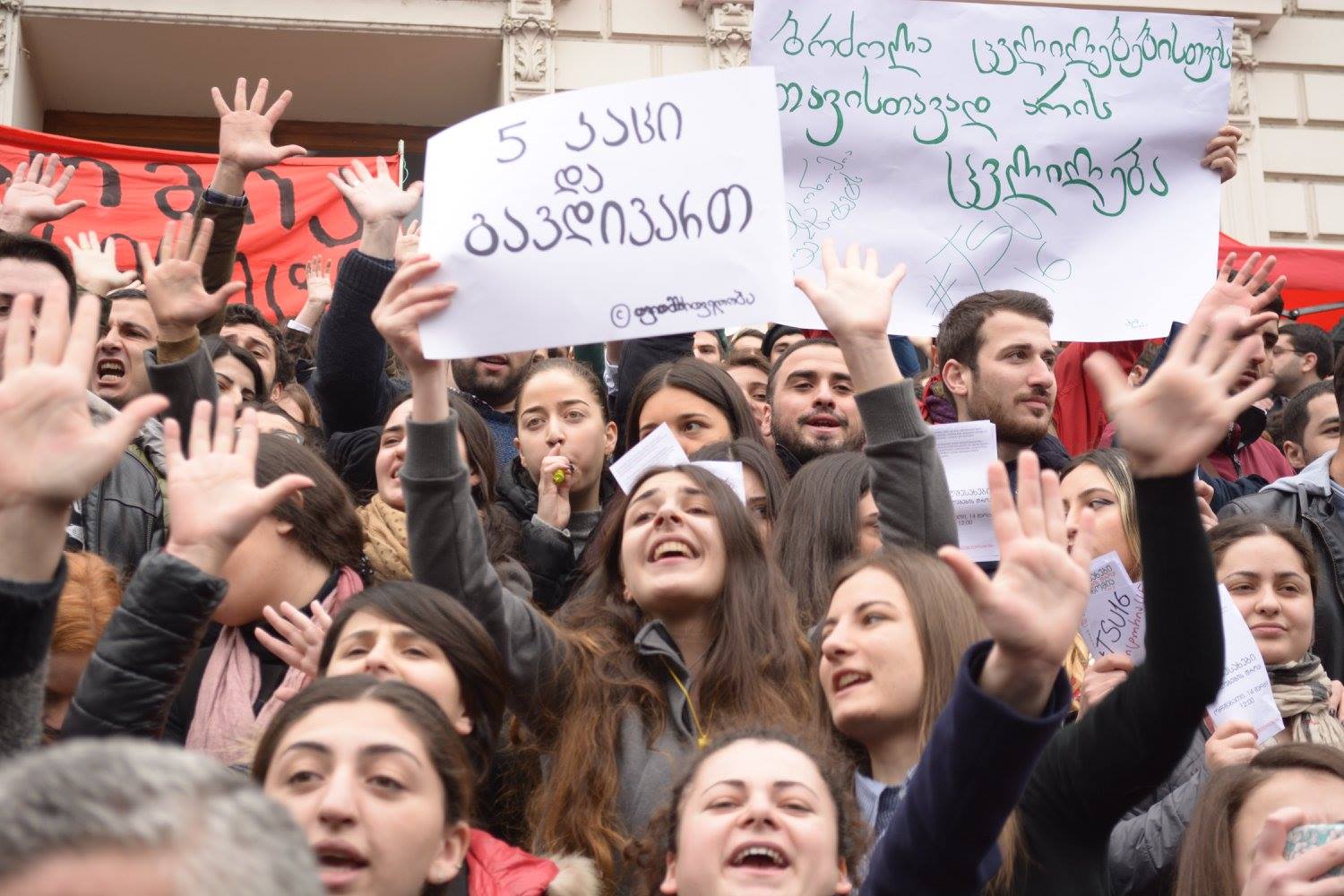
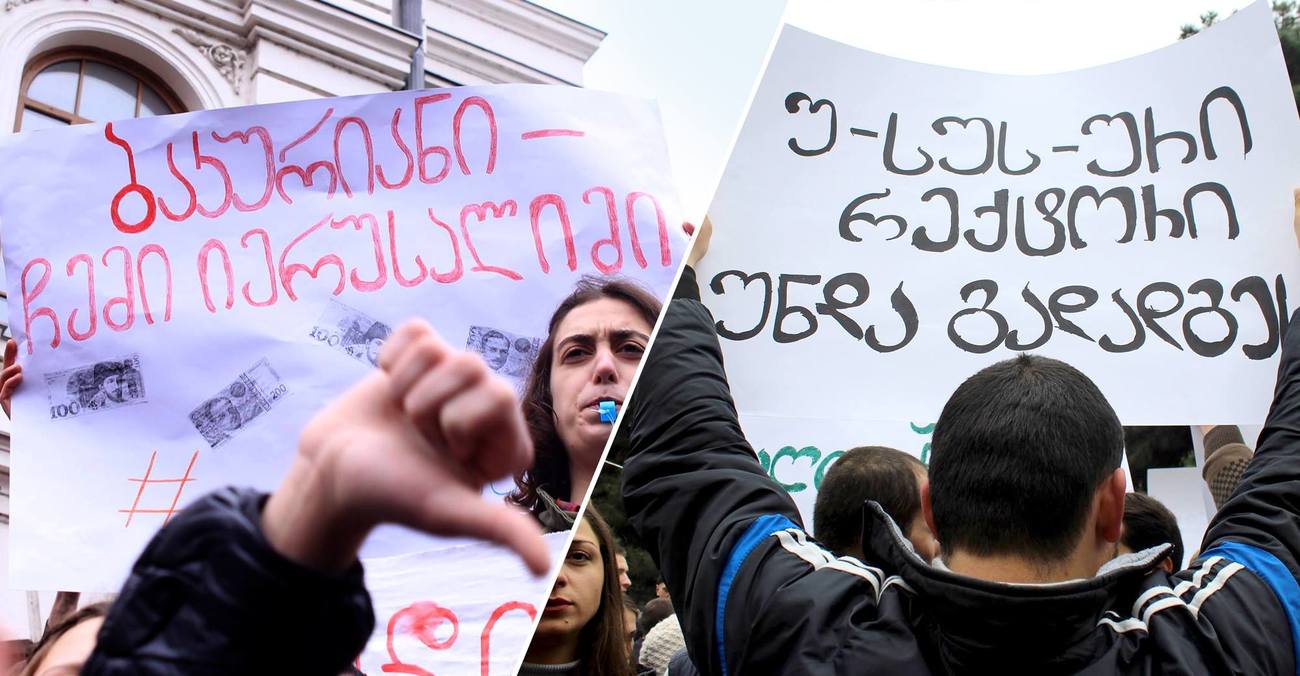
On March 7, 2016, a student movement at Tbilisi State University (TSU) called “Students Against Education Policy” organized a protest under the slogan “All students are equal – No to Student Government privileges.” The demonstration was triggered by reports that 75 members of the university’s Student Government had attended a “Project Management and Strategic Leadership” training in Bakuriani from February 28 to March 5, costing 24,600 GEL.
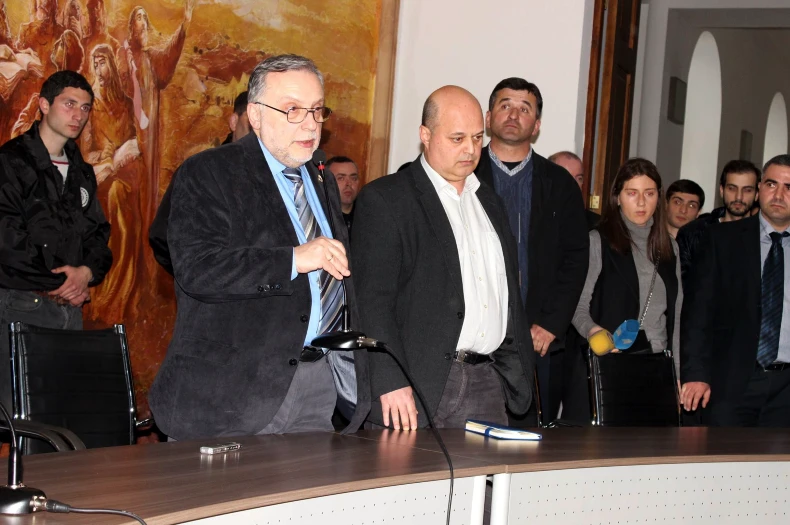
The protest began outside the university’s first building and then moved to Rector Lado Papava’s office, where students issued several demands: that the administration and rector take responsibility for what they saw as misuse of university funds; that spending limits for student projects be set; that the Student Government’s sole function be participation in representative university bodies; and that no administrative or financial resources be used to support so-called “independent candidates” tied to the Student Government.
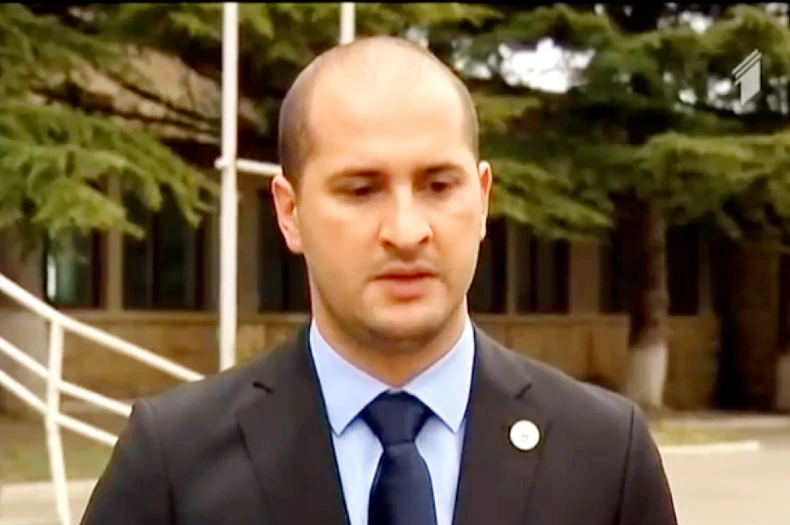
Tensions rose as the March 10 chancellor election approached. The chancellor was the second most powerful position at TSU after the rector, managing the university’s finances. The academic council nominated Giorgi Gafrindashvili—a former Student Government member—for the role. Protest leaders, including Giorgi Arobelidze, argued that Gafrindashvili was part of the same system that had restricted student activism in 2011. Members of the “Students Against Education Policy” movement claimed that the State Security Service maintained an undercover representative—known as an odieri—inside the university. Rector Papava later confirmed to Netgazeti that the Security Service did have a representative, naming the rector’s assistant, Ivane Kavsadze.
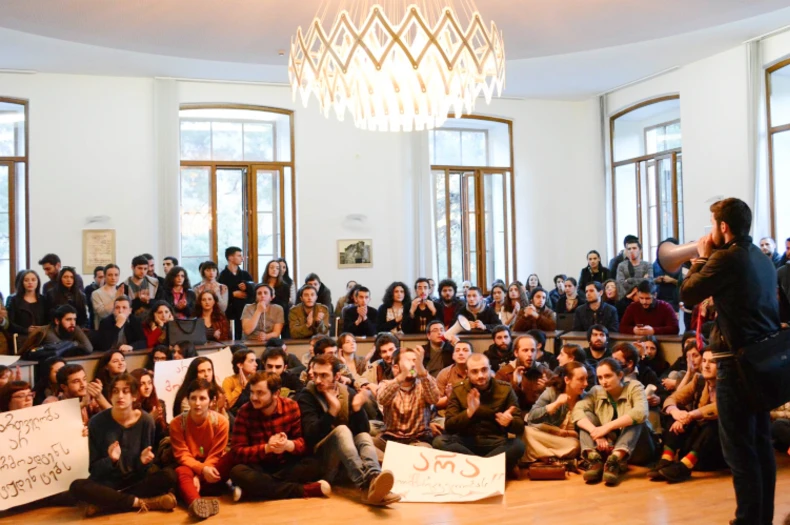
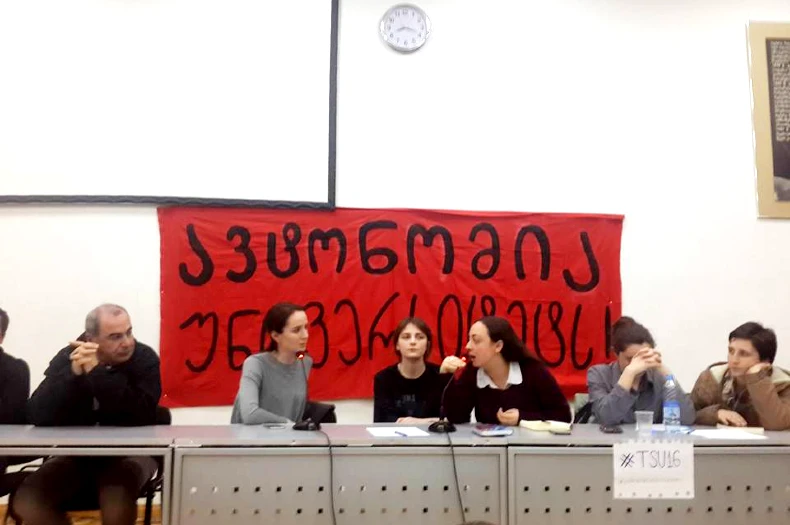
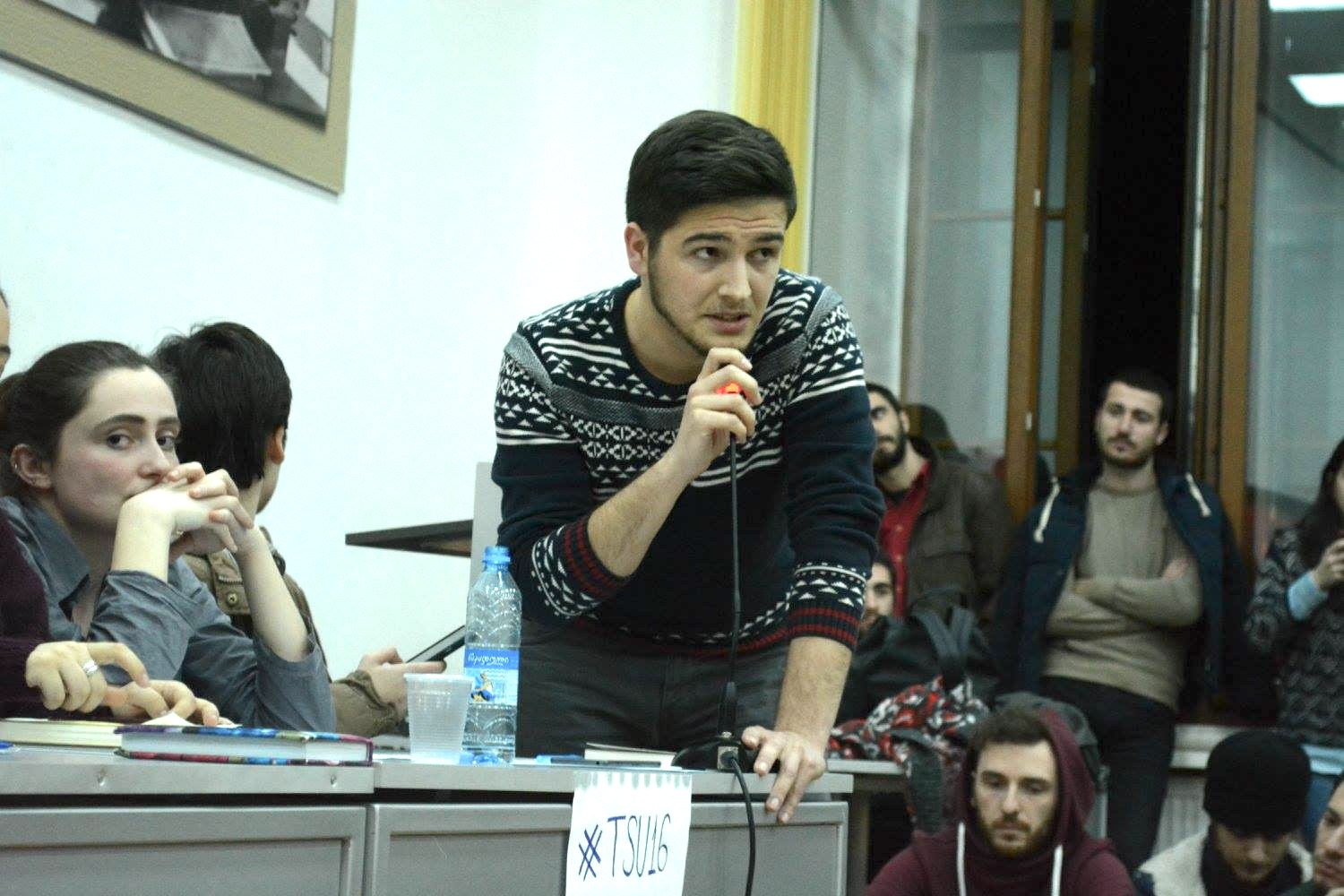
The student movement occupied Auditorium 115 on the first floor of TSU’s main building, which later gave the group its name: Auditorium 115.
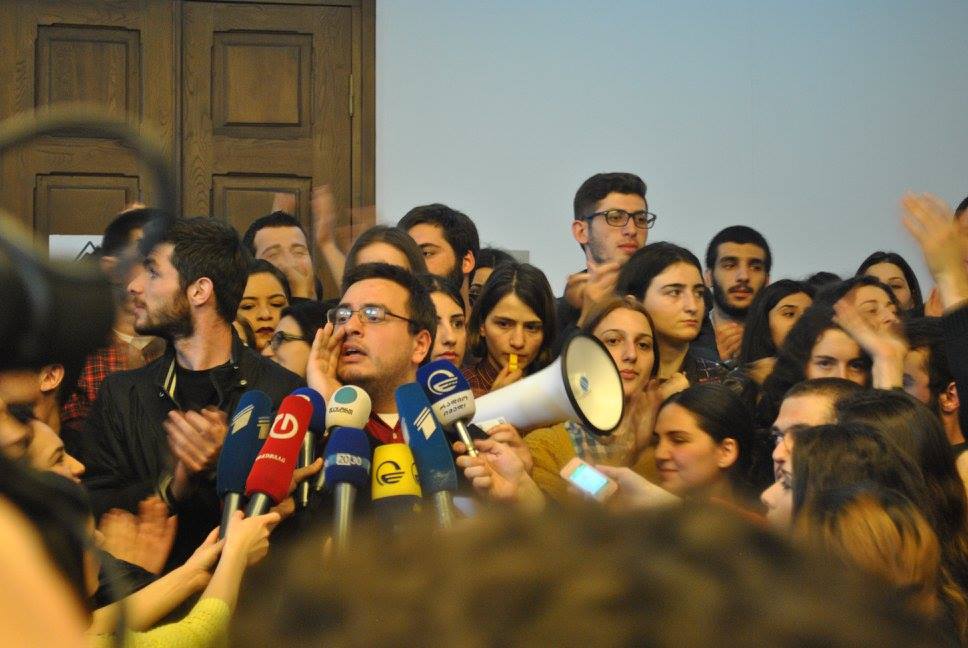
On March 10, the day of the chancellor election, students attempted to enter the senate session where voting was taking place, but security blocked access. Clashes broke out when protesters tried to breach the cordon; some managed to enter the meeting hall and demanded that Gafrindashvili withdraw his candidacy. As a result, no chancellor was elected. Many protesters spent the night inside the university, continuing the sit-in under the banner of Auditorium 115.
Over the following days, student protests spread to other cities—students at Batumi Shota Rustaveli State University and Kutaisi Akaki Tsereteli State University held solidarity rallies. Prime Minister Giorgi Kvirikashvili eventually urged Gafrindashvili to withdraw his candidacy, which he did, while Education Minister Tamar Sanikidze met with the protesters on March 13.
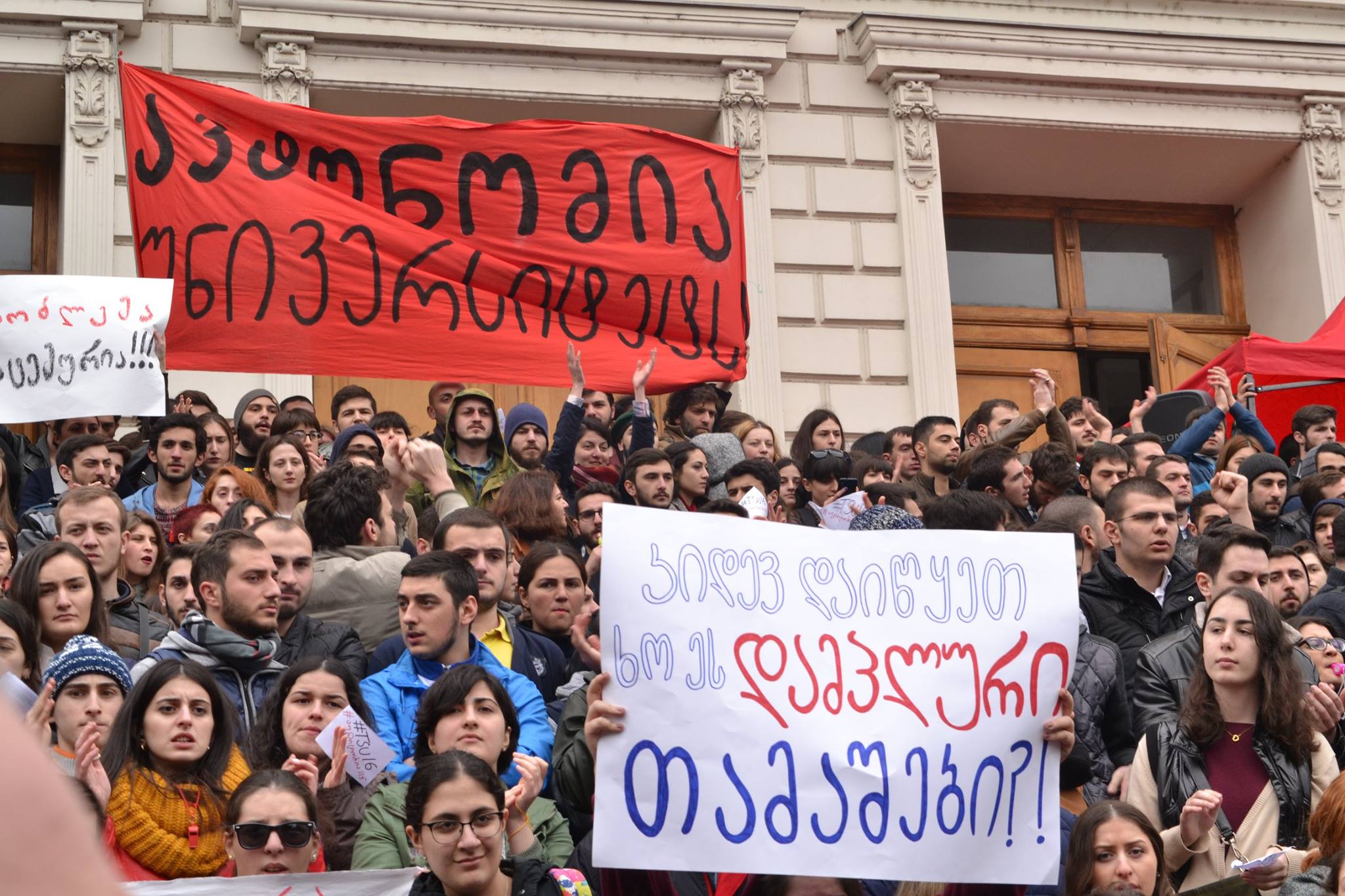
Meanwhile, TSU’s official Student Government staged counter-protests, demanding Rector Papava’s resignation instead of systemic reform. On March 14, both groups held parallel demonstrations outside the main building, carrying opposing slogans. Auditorium 115’s supporters displayed banners reading “No to privileges,” “Autonomy for the university,” and “24,600 for self-rule,” while Student Government members held a banner reading “Rector, the university hurts from division.” That night, Student Government protesters attempted to break into the rector’s office but were stopped by police.
On March 15, Student Government members occupied the rector’s office and declared they would not leave until Papava resigned. Meanwhile, professors Giuli Keshelashvili, Isolda Chiladze, and Manana Kharkhela began a hunger strike, demanding that the rector stay in office.
By mid-March, negotiations began between Auditorium 115 and the Ministry of Education. The government promised that the odieri (Security Service representative) would no longer operate at TSU and that education reforms would continue. Both groups ended their protests, and classes resumed on March 17.
However, internal changes followed: two professors resigned from the academic council in solidarity with the students. Later that month, Student Government members resumed their protest, this time with a hunger strike demanding Papava’s resignation. On March 30, Rector Vladimer Papava submitted his resignation, which the council accepted.
Auditorium 115 continued organizing, transforming into a broader civic movement that addressed national issues beyond university politics, including opposition to large hydropower projects and advocacy for labor rights.