Chiatura miners went on strike

2012

This AI-generated translation may not be completely accurate.
Chiatura miners went on strike
On October 14, 2012, miners in Chiatura went on strike. Around 3,700 employees of “Georgian Manganese” refused to resume work, while ten miners began a sit-in protest inside the Pataridze mine. The strike was triggered by a disagreement over wage increases, as miners demanded a 100% salary raise. They also claimed that there was a system of “double accounting” within the company.
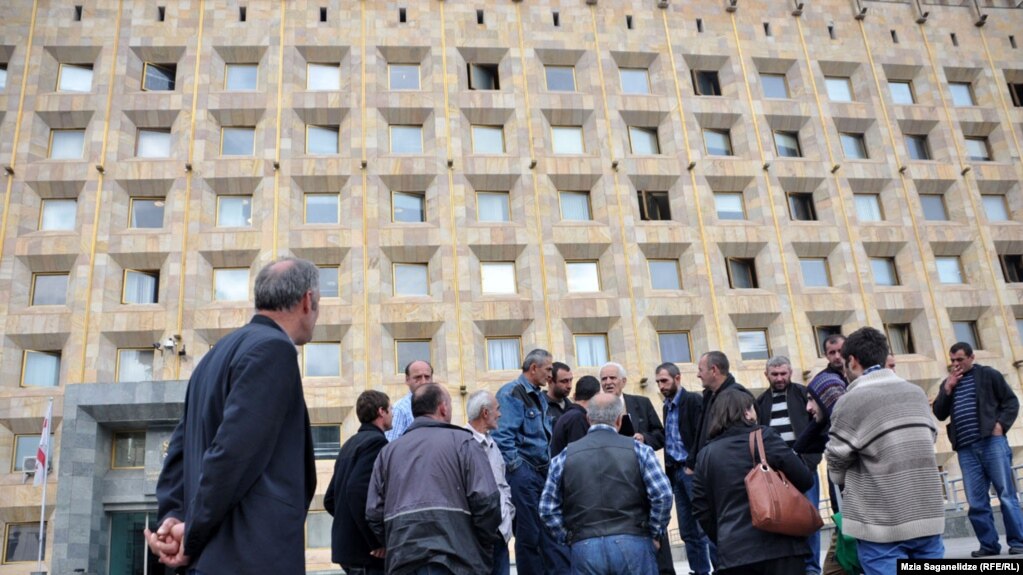
On the night of October 18, after a meeting between “Georgian Manganese” General Director Vladislav Lozinski and the miners, the workers were promised improvements in working conditions and technical equipment. However, by the 17th day of the strike, the miners still had no clear answers as to whether their demands would be met. On November 1, a group of 20 miners from Chiatura traveled to Tbilisi to protest outside the State Chancellery. They requested a meeting in writing with Bidzina Ivanishvili, who had been appointed Prime Minister on October 25. The night before, they had protested in front of the presidential residence over harsh working conditions and low wages. Their banners read: “Worker, not slave,” and “Misha created slavery.” By that time, their main demand was a 50% wage increase and the payment of bonuses.
On November 1, it was reported that some miners had returned to work, with only the Itkhvisi mine remaining fully on strike, according to the administration of “Georgian Manganese.” However, some miners denied this claim.
“Our company must be audited to investigate its financial operations and expose all violations. We want them to examine our working conditions too — the unbearable environment we’ve endured. We want to know the value of our labor, to understand what our work is worth, so we can demand fair pay. We don’t even know who our investor is or under whose control we’re working,” the protesters said.
“Georgian Manganese” told Radio Free Europe/Radio Liberty that, apart from the Itkhvisi mine, five mines were already operational, and more than 1,000 miners had voluntarily returned to work. The company stated that “there is now a significant split among the groups, and they can no longer agree among themselves.” It also claimed that key demands had been met: surveying work had begun, working conditions were improving, and new equipment had been purchased, though its delivery to Chiatura required time. The company said a 100% wage increase was impossible, offering instead a 32% raise.
On November 6, MP Gia Jorjoliani announced that Prime Minister Bidzina Ivanishvili had decided to establish a temporary commission within the Prime Minister’s Office to examine “labor relations and issues related to social dialogue.” According to Jorjoliani, he personally informed the miners of this decision: “The workers expressed full trust in the Prime Minister and this commission, viewing it as a guarantee. They agreed to the proposal made by the administration,” he said. Under this agreement, Chiatura miners’ wages would increase by 32%, though no consensus was reached on the issue of bonuses.