Chiatura Miners’ Protest

2023

This AI-generated translation may not be completely accurate.
Chiatura Miners’ Protest
In the municipality of Chiatura, manganese mining is the dominant economic sector, with the sole state license holder, Georgian Manganese, serving as the main employer since 2006. From the very beginning, all complaints regarding unsafe working conditions, exhausting schedules, low wages, and environmental damage have been directed at the company. In recent years, as the environmental degradation in Chiatura has become visibly severe—villages collapsing, yards sinking—local protests have increasingly focused on ecological issues alongside demands for fair compensation and better labor conditions.
In 2023, a new wave of protests broke out after Georgian Manganese announced the suspension of operations in all four mines and nine shifts starting February 1, citing a global market crisis. Workers received only 60% of their wages until May. When operations resumed, the company imposed new conditions: 8-hour shifts instead of 12, and pay based on meters mined rather than ore weight, meaning reduced income for many.
Strike
On June 5, miners went on strike for the fourth time in five years, demanding restoration of the old schedule, wage increases, improved insurance, paid leave, and safer working conditions. Wages at the time ranged between 1,200–1,400 GEL, and miners demanded a 40% raise. The company refused, claiming the demand was “illogical.” Some miners began hunger strikes, with one sewing his eyes shut and another his mouth.
The miners also noted that taking leave is a luxury for them, and that once they enter the mine, they often do not know whether they will emerge alive. In recent years, several miners have died in Chiatura.
At the same time, a mediation process was underway. On June 12, the Ministry of Health joined the mediation process between the company and the employees and on June 15, miners held a large march through Chiatura. The Public Defender, Levan Ioseliani, visited, offering to facilitate negotiations. However, the company only agreed to minor benefits, rejecting the pay raise and schedule restoration.
On June 19, Georgian Manganese held a press conference. The company’s director, Lasha Tutberidze, said that the proposed wage increase would cost the company a total of USD 10 million and described the miners’ demands as “illogical.”
Chiatura Protest Moves to Tbilisi
That same day, around thirty miners traveled to Tbilisi and set up tents in front of Parliament. Tariel Mikatsadze said the miners were prepared to compromise and were now demanding only a 20 percent wage increase. No agreement was reached with the company, even on the 14th day of the strike and the eighth day of the hunger strike.
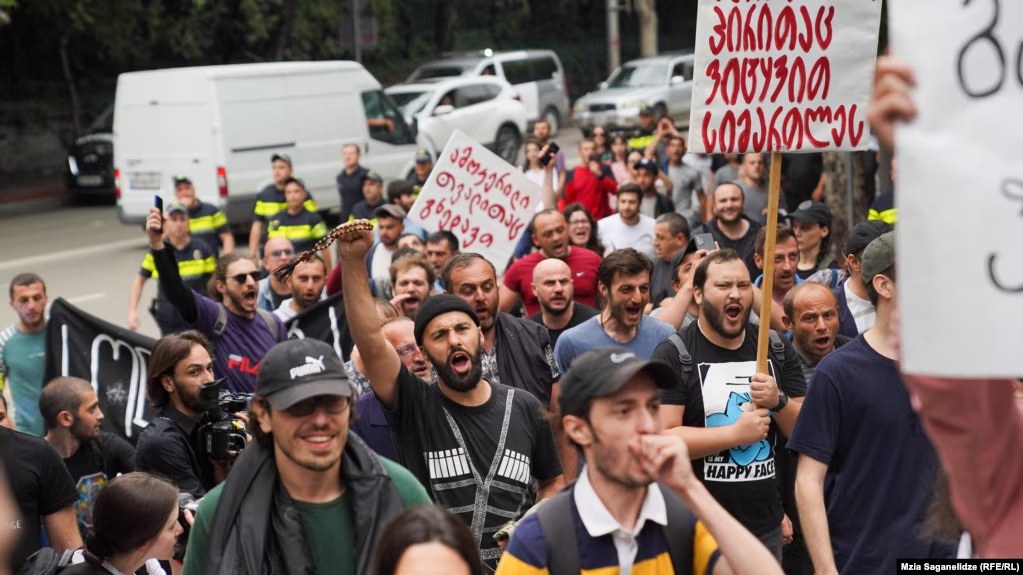
On June 20, the miners in Tbilisi marched to the Georgian Manganese office. “What is a miner like?” Tariel shouted. “Strong!” the marchers replied. Passing cars occasionally responded with honking. Several dozen people joined the march, and a banner reading “Solidarity with the miners” was carried by participants.
At 7 p.m., after returning unsuccessfully from the Georgian Manganese office to Rustaveli Avenue, the miners encountered only a small crowd and another protest underway. That rally called for the release of Georgia’s third president, Mikheil Saakashvili. Shortly afterward, Beka Grigoriadis—the father of Lazare Grigoriadis, who was arrested on March 29—also began protesting at the same location. His son had taken part in demonstrations against the so-called “Russian law” on March 7–9 and was charged with assaulting a police officer, an offense carrying a potential sentence of up to 11 years in prison. Police allowed the miners to pitch tents but denied permission to Beka Grigoriadis.
The miners proceeded with their rally; however, by 8 p.m., only about 300 people had gathered outside Parliament in support.
Agreement
On June 21, the miners launched a hunger strike.
On June 24, Georgian Manganese announced on its official Facebook page that an agreement had been reached with the miners. According to the statement, the miners’ primary demand—higher wages—was satisfied.
Under the agreement, miners’ wages for the period from January 1 to July 1, 2023, would increase by 5 percent, while wages paid from July 1 onward would rise to a total increase of 12 percent.
The agreement also provided for the creation of a joint commission to develop a crisis recovery plan over the next three months. An independent auditor would conduct a financial audit of the company, and the Labor Inspection Service would oversee the implementation of the agreement.
The miners noted that in previous years, many promises had been made but few fully honored. “We will have to constantly remind them and monitor whether our demands are being met,” they said as they ended the protest.