Bread Riot in Georgia

1993

This AI-generated translation may not be completely accurate.
Bread Riot in Georgia
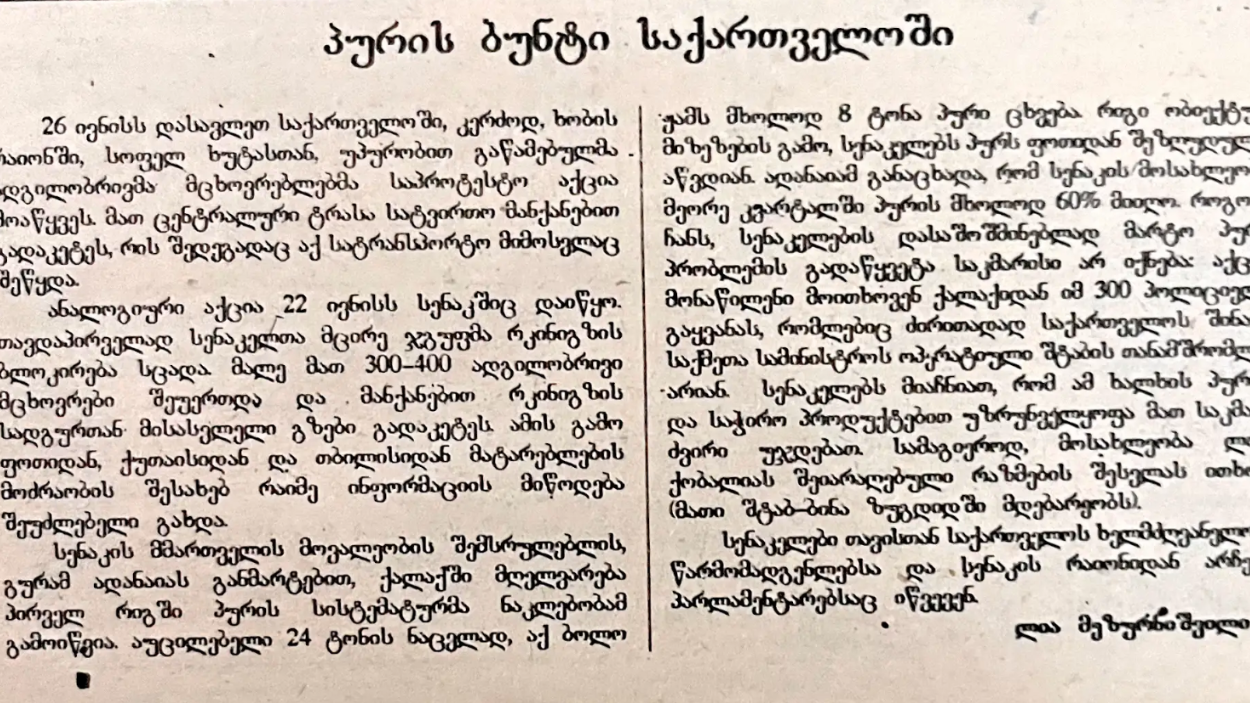
In June 1993, Georgia experienced a major bread riot as severe food shortages pushed people into the streets. The crisis, widely remembered as the 1993 bread riots in Georgia, began in Senaki, where residents protested against the lack of bread and rising costs of basic products.
On June 22, 1993, a small group of protesters in Senaki tried to block the railway, and soon 300–400 local residents joined them, cutting off access roads to the railway station. Guram Adamia, acting governor of Senaki, explained that unrest was fueled by the systematic shortage of bread: instead of the required 24 tons, only 8 tons were being baked. Deliveries from Poti were limited, leaving families without essential food. Protesters demanded not only reliable bread supplies but also the withdrawal of 300 police officers from the city.
The bread protests in Georgia spread quickly. On June 26, villagers from Khuta in Khobi District, described in newspapers as “tormented by the lack of bread,” blocked the central highway with trucks. This action completely disrupted transportation and highlighted the growing desperation across the country.
By August 9, 1993, a demonstration was held in Lentekhi. Local residents demanded the resignation of the district administration and punishment of those accused of illegally selling off flour meant for the population. According to Resonance newspaper, “people have no flour reserves and are practically starving.”
A week later, on August 16, reports confirmed that 14 tons of flour had been delivered to Lentekhi, mostly from Kutaisi. Zurab Bendeliani, the district prosecutor, admitted that bread was not being baked locally due to the crisis. Instead, flour was rationed to households in limited amounts. He also confirmed that criminal cases had been launched over the mismanagement and sale of flour supplies.
The 1993 bread riots in Georgia demonstrated the severity of the country’s post-Soviet economic collapse. With railways and highways blocked, city officials under pressure, and communities struggling to survive without bread, these protests became a defining moment of Georgia’s early 1990s crisis.