Against the Blackmail of a “Batumelebi” Journalist

2009

This AI-generated translation may not be completely accurate.
Against the Blackmail of a “Batumelebi” Journalist
The Batumi-based newspaper Batumelebi reported that on 25 November 2009 its journalist, Tedo Jorbenadze, was blackmailed inside the Ministry of Internal Affairs building in Batumi. According to the publication, a man identified as “David” threatened the journalist and attempted to force him into collaboration with Georgia’s security services.
The police officer warned Jorbenadze that if he refused, law enforcement officials would distribute fabricated photo material allegedly showing him with naked men. At the time, Batumelebi was known as an award-winning, highly professional, and government-critical media outlet, making the incident particularly alarming for the press community.
Following the blackmail attempt, Tedo Jorbenadze appealed to the Prosecutor’s Office to open an investigation. On 30 November, Batumelebi publicly called on the international community for support, stating that journalists no longer felt safe in Georgia.
“This tactic reminds us of Soviet-era security services, which have no place in a modern democracy,” the outlet wrote in its statement.
Public Protest and Support for Press Freedom
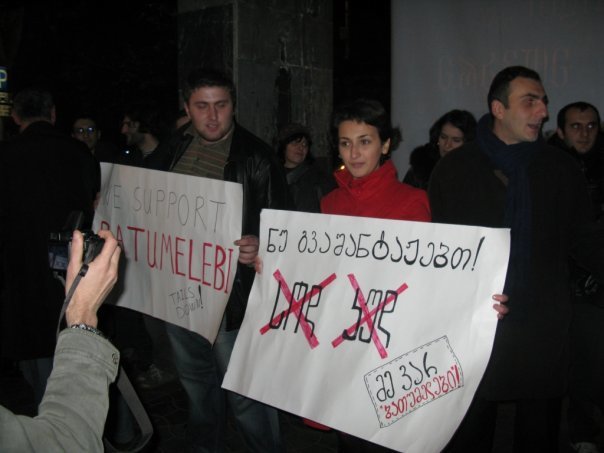
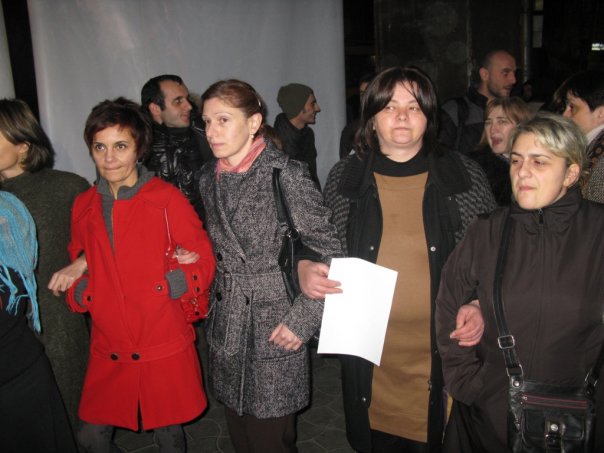
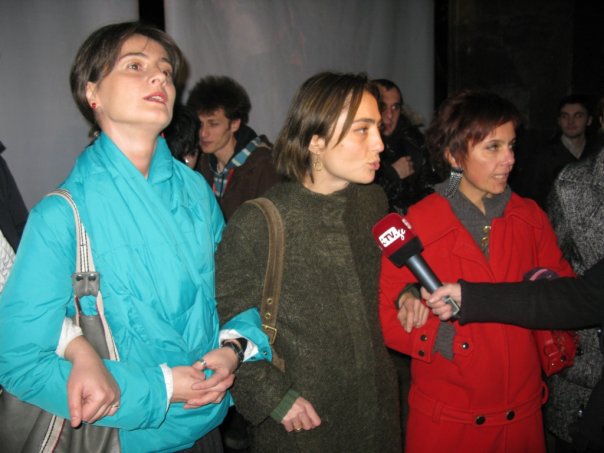
On 1 December 2009, a public protest was organized via Facebook. Minutes before the start of the Tbilisi Film Festival, journalists, artists, bloggers, and civil society representatives gathered at Amirani Cinema in Tbilisi to support Batumelebi.
Participants demanded a transparent investigation and punishment of those responsible for the blackmail attempt. Banners read: “Free press is being persecuted,” “We support Batumelebi,” “Freedom for the media.”
Despite public pressure, the case remained uninvestigated. One year later, Batumelebi managed to identify the alleged blackmailer themselves: David Devnozashvili, an employee of the Ministry of Internal Affairs. Mzia Amaghlobeli, the director of Batumelebi, personally visited Devnozashvili’s home, where he confirmed that he had indeed worked in Batumi in 2009.
In 2012, photographer Giorgi Abdaladze stated that during his controversial arrest with three other photographers in 2011, Devnozashvili forced him to falsely confess to espionage. Another photographer involved in the same case, Natia Gedenidze, confirmed this claim.
In 2013, Batumelebi uncovered another participant in the blackmail incident — Zaza Gujabidze, who allegedly acted together with Devnozashvili.
After the Georgian Dream party came to power in 2012, the Prosecutor’s Office showed little urgency in investigating the blackmail or related abuses. Devnozashvili was arrested only in 2016. Tedo Jorbenadze’s case, however, was classified as “secret”, and no further updates were released. In the “photographers’ case,” Devnozashvili was eventually sentenced to 4.6 years in prison.
To this day, the outcome of Jorbenadze’s blackmail case remains unknown.