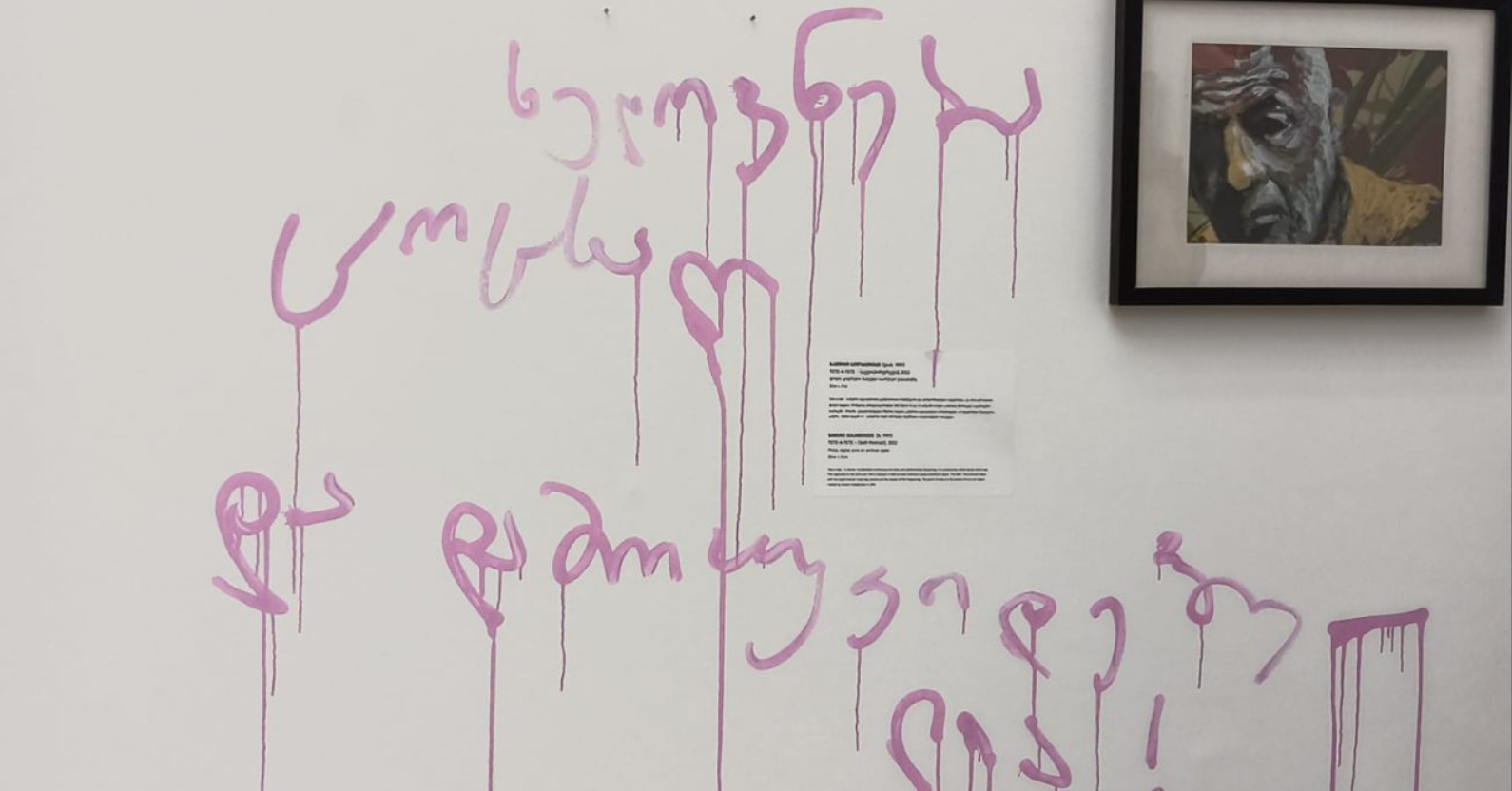
“Art is Alive and Independent”

2023

This AI-generated translation may not be completely accurate.
“Art is Alive and Independent”
On February 4, 2023, during the exhibition “Self-Portrait with a Mirror” at the National Gallery — which featured works by 41 artists — painter Sandro Sulaberidze removed his own artwork from the wall and painted the phrase “Art is alive and independent” in its place.
The Georgian National Museum later issued a statement saying:
“…The National Gallery has given some lesser-known artists the opportunity to showcase their work for the first time, which was not previously part of the museum’s exhibition policy. This kind of state support for artists serves to promote freedom and independence in art. It is unfortunate that some artists have used this opportunity for political purposes.”
Sulaberidze did not make any comments at the gallery, but art circles and social media widely interpreted his action as a protest against the cultural policies of Minister of Culture Thea Tsulukiani, particularly concerning the museum system and the broader state of cultural governance.
Shortly afterward, criminal proceedings were launched under Article 177, Part 2(a) of the Criminal Code — theft causing significant damage.
In response, on February 12, artists, cultural workers, and supporters gathered in front of the National Gallery on Rustaveli Avenue for a protest with the same message: “Art is alive and free.” They demanded that the investigation against Sulaberidze be dropped.
“Thea Tsulukiani’s policies are hostile to culture. Just look at the state of Gelati, the disarray of the National Museum, the halted projects — the entire field is demoralized,” said Nikoloz Tsikharidze, head of the Union of Science, Education, and Culture Workers, who attended the rally.
During the protest, police clashed with civil activist Nata Peradze, using physical force as they tried to confiscate her paints.
In the following days, supporters of artistic freedom replicated Sulaberidze’s graffiti across Tbilisi — the phrase “Art is alive and independent” quickly spread through the city’s streets.
Some artists who had participated in the exhibition issued a statement demanding that the investigation against Sulaberidze be terminated and expressed their wish to withdraw their own works from the exhibition in solidarity. On February 14, the National Museum announced that, since some artists no longer wanted to participate, the exhibition would be closed twenty days early.
That same day, the Ministry of Internal Affairs declared that the investigation into Sulaberidze’s case had been closed due to the absence of criminal elements.