Protests against COVID-19 regulations

2020

This AI-generated translation may not be completely accurate.
Protests against COVID-19 regulations
From the end of 2019, a new coronavirus, COVID-19, began spreading globally, with the first confirmed cases reported in China. The disease led to a pandemic — the most extensive outbreak of its kind — and within weeks, countries around the world introduced strict regulations to limit social activities.
In Georgia, the first COVID-19 case was confirmed on February 26, 2020. On March 21, the government declared a state of emergency, when about 50 cases were recorded. This allowed the executive branch to restrict key constitutional rights, including freedom of movement. On March 23, the municipalities of Marneuli and Bolnisi were locked down after a woman who attended a ritual gathering tested positive for the virus.
From March 31, a nationwide quarantine went into effect, which banned:
- Gatherings of more than three people;
- Public transportation, including intercity travel (except taxis);
- Movement during a curfew from 9:00 p.m. to 6:00 a.m., except for those with special permits.
Some restrictions had already been introduced earlier. For example, on March 18, intercity minibus services were banned.
The first protest took place on March 19, when minibus drivers from Gurjaani–Telavi and Gurjaani–Tbilisi routes demanded a delay in utility payments, saying they had lost their income sources due to restrictions.
Over the following months, protests against COVID-19 regulations continued across the country:
- April 22, 2020: Residents of Shulaveri village in Marneuli protested that they could not sell their agricultural produce due to restrictions.
- April 23, 2020: The political party Girchi held a rally at the hippodrome in Tbilisi demanding the end of the state of emergency. Police detained participants for violating emergency rules.
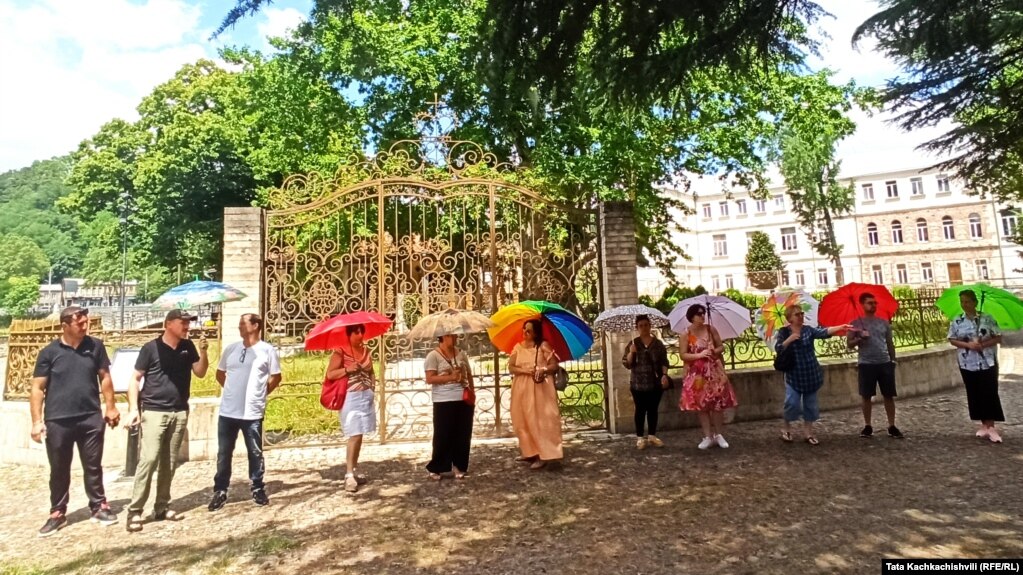
- June 30, 2020: Tour guides in Kutaisi held an umbrella performance rally — “Guides with umbrellas – we exist through tourism!” — protesting income loss.
- July 15, 2020: Tourism workers gathered at the Government Administration in Tbilisi, demanding the reopening of borders and flights. Their signs read: “Tourism doesn’t kill,” “Tourism = economy,” “End quarantine zones.”
- July 31, 2020: Residents of Karajala protested a planned lockdown, asking that those who tested negative for COVID-19 be allowed to leave the village.
- August 2, 2020: Traders in Bodbe village, Sighnaghi Municipality, protested the continued closure of the Sunday market that left about 700 vendors without income.
- August 17, 2020: Residents of Mestia demanded the reopening of the municipality, which had been under lockdown since August 10.
- September 1, 2020: Kindergarten employees and parents protested in Batumi, demanding earlier reopening of private kindergartens.
- September 2, 2020: About 50 self-employed workers who had lost income due to border closures protested in front of the Adjara government office, demanding more financial aid.
- October 24, 2020: The Labor Party held a rally titled “No to epidemic bureaucracy” in Tbilisi, calling for 1,000 GEL compensation for the socially vulnerable.
- November 30, 2020: Protesters gathered at the back entrance of the Parliament, demanding the lifting of the curfew and the release of political prisoners.
- January 24, 2021: Parents’ groups protested in Tbilisi’s Mziuri Park, demanding clear plans for reopening schools and kindergartens.
- January 25, 2021: The Transport for All movement protested in front of the Government Administration, demanding the restoration of public transport.
- January 26, 2021: Animators and children’s center employees dressed in costumes protested COVID restrictions, calling for reopening.
- January 28, 2021: Vendors in Kutaisi markets and shopping centers protested, saying that without public transport, reopening businesses was meaningless.
- January 31, 2021: A performance protest in Kutaisi displayed a cage labeled “Economy” to symbolize lockdown restrictions.
- February 6–7, 2021: Protesters in Tbilisi held nighttime demonstrations demanding the lifting of the curfew, some spending the night in tents despite the restrictions.
- March 6 and 20, 2021: Repeated protests in Tbilisi’s Freedom Square and in front of the Government Administration demanded the reopening of the country.
Although COVID-19 regulations were gradually relaxed, it remains unclear whether these decisions were influenced by public protests.
- On February 8, 2021, public transport resumed;
- On June 30, 2021, the curfew was lifted;
- On March 28, 2022, as the government declared the pandemic over, all remaining COVID-19 restrictions were officially abolished.