Murder of Sandro Girgvliani

2006

This AI-generated translation may not be completely accurate.
Murder of Sandro Girgvliani
The Sandro Girgvliani case became one of the darkest stains on Georgia’s post–Rose Revolution government. It all began on January 28, 2006, when the body of 28-year-old Sandro Girgvliani was found near the Okrokana cemetery in Tbilisi. His body showed multiple injuries and signs of severe beating. On February 12, 2006, a report aired on Imedi TV revealed that Girgvliani’s murder had followed an argument with high-ranking officials at a bar on Shardeni Street.
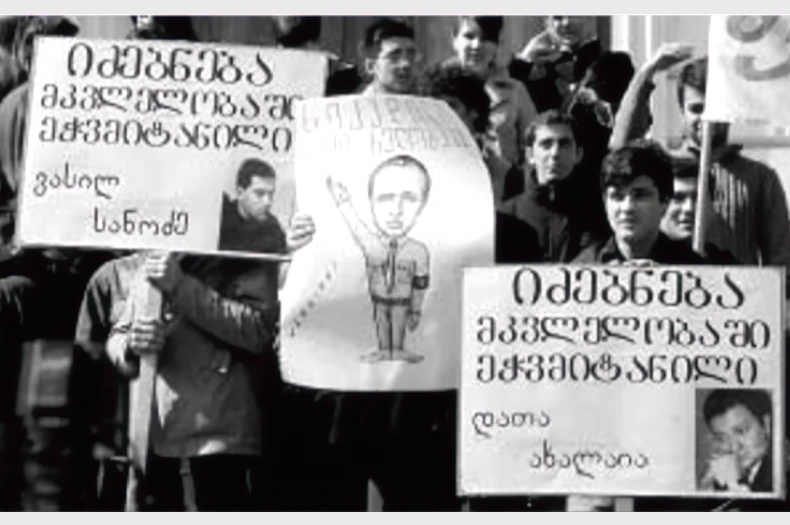
According to the court’s findings, on the night of January 27, Girgvliani and his friend Levan Bukhaidze went to the bar to meet Tamta (Tatia) Maisuradze, who was there with friends, including Anna Kalandadze, Tako Salakaia (the wife of Interior Minister Vano Merabishvili), Data Akhalaia (head of the Constitutional Security Department), his deputy Oleg Melnikov, Vasil Sanodze (head of the MIA’s General Inspection), and Guram Donadze (head of the MIA Public Relations Department). The group was celebrating Sanodze’s birthday.
After Girgvliani protested Maisuradze’s company at the officials’ table, a heated exchange took place. Later that night, Girgvliani and Bukhaidze were abducted and brutally beaten. Girgvliani died from his injuries, while Bukhaidze managed to escape. The attackers were later identified as MIA officers: Giorgi (Gia) Alania, Avtandil Aptsiauri, Aleksandre Ghachava, and Mikheil Bibiluridze.
The investigation and public outrage
The investigation, led by the Ministry of Internal Affairs, immediately sparked distrust among Girgvliani’s family, the opposition, and human rights organizations. They argued that the ministry could not objectively investigate a crime involving its own officers. Opposition parties, including the Democratic Front and New Rights, demanded the resignation and arrest of the officials linked to the case, including Oleg Melnikov, who was accused of participating directly in the assault.
On February 28, when Interior Minister Vano Merabishvili appeared before Parliament, opposition MPs walked out in protest and announced upcoming rallies. Despite dismissing Guram Donadze on March 7, Merabishvili declared the case solved the next day. Four MIA officers were arrested, but they were placed together in the same cell — a violation of prison law.
Calls for justice
Girgvliani’s mother, Irina Enukidze, vowed to fight until the end and became the symbolic leader of the protests. Despite the resignation of Data Akhalaia and Vasil Sanodze on March 13, public outrage grew. On March 16, citizens across Tbilisi honked their car horns in protest against Merabishvili, followed by rallies outside the MIA with posters reading, “MIA – Your Life Is in Danger.” President Mikheil Saakashvili expressed full support for Merabishvili, calling the resignation demands “ridiculous.”
Privileges for the convicted
Reports later revealed that the convicted officers received privileged treatment in prison — access to alcohol, phones, and even visitors. Neighbors claimed they heard laughter and parties coming from their cells. In a 2014 interview, Mikheil Bibiluridze said, “Many people outside didn’t have what we had inside — TVs, computers, mobile phones, air conditioning… we had fun, women, food, and drinks.”
Protests and verdict
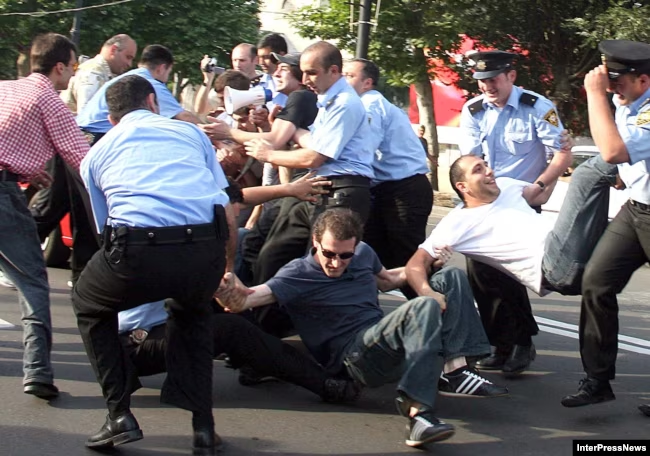
Protests continued for months. On May 23, members of the Equality Institute began a hunger strike. Police later dispersed protesters outside Parliament and detained several activists for attempting to block Rustaveli Avenue.
On July 6, 2006, Tbilisi City Court sentenced Gia Alania to 8 years in prison and the other three officers to 7 years each. Girgvliani’s family walked out of the courtroom in protest, saying the trial ignored the involvement of high-ranking officials such as Tako Salakaia, Data Akhalaia, and Oleg Melnikov.
That same evening, Rustavi 2 host Eka Khoperia resigned live on air, saying, “When such a murder happens, at the very least, the Interior Minister should resign.” Public figures joined protests demanding justice, but mass demonstrations eventually faded.
Aftermath and European Court ruling
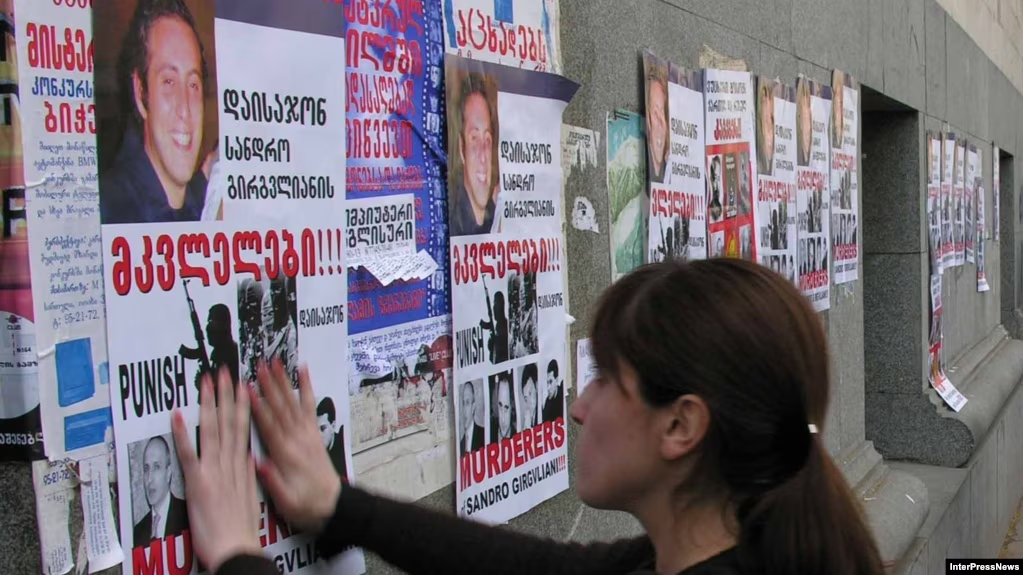
The case became a symbol of systemic abuse under the United National Movement government. Activists plastered Tbilisi with posters reading “Punish the death squads,” “Defend the right to life,” and “Murderers belong in prison.”
In July 2007, the Supreme Court reduced the convicts’ sentences by six months. In August, Girgvliani’s mother, Irina Enukidze, died. In November 2008, President Saakashvili pardoned the officers, and by September 2009, they were released early.
In 2011, the European Court of Human Rights ruled that the Georgian state had violated Article 2 — the right to life — stating: “The Court is shocked that all branches of government — the Ministry of Internal Affairs, the Prosecutor’s Office, the judiciary, the prison system, and the President — acted in concert to ensure that justice was not done in this horrific murder case.”