For the release of Vazha Gaprindashvili

2019

This AI-generated translation may not be completely accurate.
For the release of Vazha Gaprindashvili
Between November 9 and 11, 2019, Russian occupation forces in Tskhinvali detained four Georgian citizens on charges of the so-called “illegal border crossing.” Three of them were fined, while the fourth — orthopedic surgeon Vazha Gaprindashvili — was sentenced to two months in prison. His family said he had crossed into the occupied territory to help a patient — a 60-year-old woman who had fallen into a well and sustained serious injuries — but was unable to transport her to the government-controlled area because the occupation forces had closed the checkpoint.
Doctor Davit Ghviniashvili, who treated the released detainees upon their return, reported that the occupation regime had demanded that Gaprindashvili “admit” to crossing the border illegally. “Dr. Vazha categorically refused and said that he was in Georgia, on Georgian soil. Neither the pleas nor the persuasion of his fellow detainees worked,” Ghviniashvili said.
The Georgian Foreign Ministry and the President’s Office appealed to international partners for help in securing his release. The U.S. Embassy demanded the doctor’s immediate freedom, while the State Minister for Reconciliation, Ketevan Tsikhelashvili, stated on November 17 that “his release will be achieved within a few days.” In contrast, the de facto South Ossetian president Anatoly Bibilov claimed the “border crossing” was a continuation of Georgia’s political provocation.
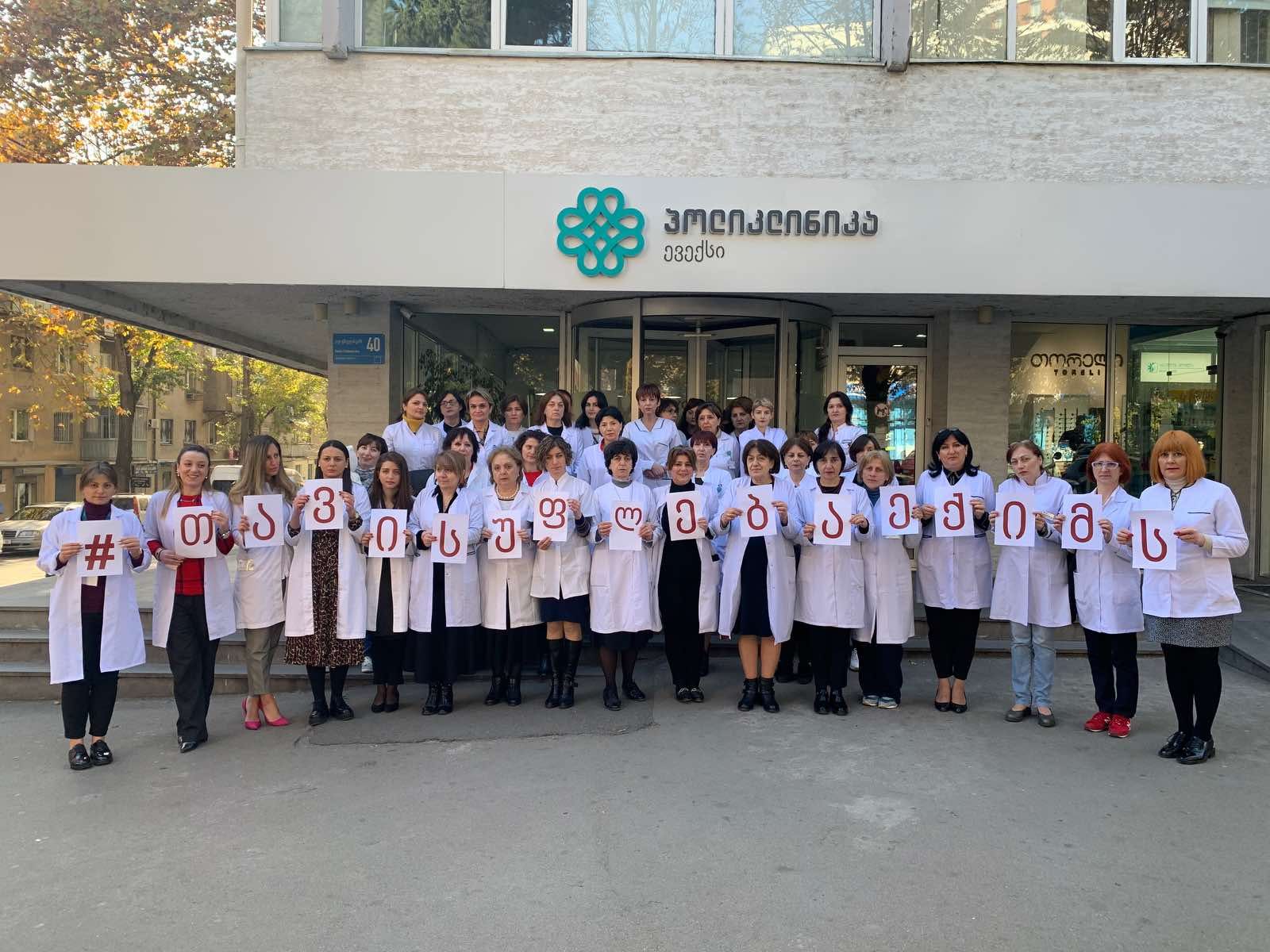
On November 18, medical workers organized a coordinated protest titled “Freedom to Doctor Vazha” in six cities across Georgia. In Tbilisi, doctors gathered outside the Republican Hospital and addressed their colleagues in South Ossetia in the Ossetian language, expressing solidarity. The doctor’s family insisted that stronger international involvement was needed for his release.
On December 15, citizens gathered at First Republic Square in Tbilisi and marched toward the occupation line. To symbolize that medical aid knows no borders, they released white coats attached to white balloons near the boundary fence.
A day earlier, as news spread about the planned demonstration, ruling-party member Erekle Kukhianidze made a controversial remark, claiming the story “smelled like a serious, filthy provocation.” He was later expelled from the Georgian Dream party on December 18.
On December 20, the occupation authorities sentenced Dr. Gaprindashvili to one year and nine months in prison. The U.S. Embassy reiterated that it did not recognize the verdict’s legitimacy, and the European Union once again demanded his release.
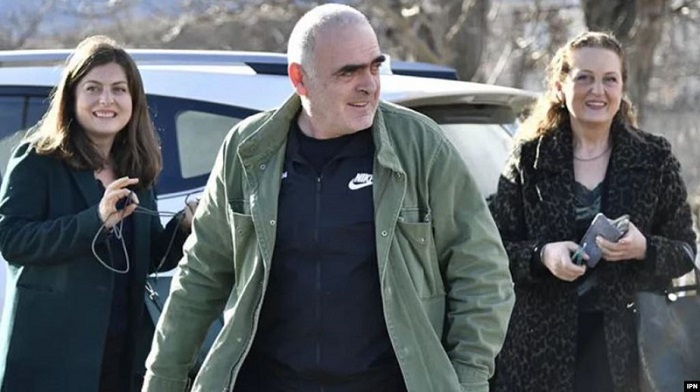
Finally, on December 28, after 48 days in detention, Dr. Vazha Gaprindashvili was freed. The de facto Tskhinvali authorities announced that he had been “pardoned” by Anatoly Bibilov. Georgia’s Foreign Minister thanked the international community and partner countries for their assistance in securing his release.