The Firefighters’ Strike in Tbilisi

1992

This AI-generated translation may not be completely accurate.
The Firefighters’ Strike in Tbilisi
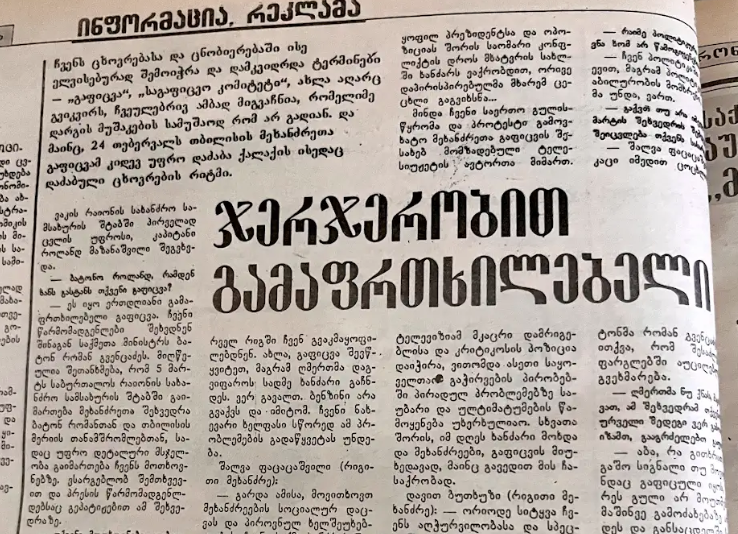
On February 24, 1992, firefighters in Tbilisi went on strike. They were demanding higher wages. At that time, their monthly salary was 300 rubles. They also faced material hardships. ‘If a fire breaks out somewhere, we can’t respond. We don’t have gasoline, that’s why. Half of our salary goes just to solve these problems,’ one firefighter said in an interview with the newspaper Droni. Another firefighter lamented: ‘Both Gamsakhurdia’s regime and the interim government used us to disperse demonstrations with water cannons, which caused protesters’ resentment toward us. When we refused to carry out such orders, unknown people came and sprayed our headquarters with automatic gunfire. We don’t want anyone to force us into such actions anymore. In addition, firefighters should not be left unprotected. During the armed conflict between the former president and the opposition, when we were extinguishing a fire at an artist’s house, both warring sides opened fire on us.’
Another firefighter complained that they lacked proper uniforms and gear: ‘When we walk in the street, we look like Russian soldiers… Our protective suits are worthless, yet we have to go into fires wearing them. Recently, Canadian and American firefighters visited. When they saw our equipment, they were astonished, saying, “How do you enter fires in such gear—are you suicidal?”’
The shift supervisor at the Vake District Fire Service headquarters stated that after this warning strike, they met with the Minister of Internal Affairs, Roman Gventsadze. It was agreed that on March 5 a meeting would be held with the firefighters to discuss their demands.