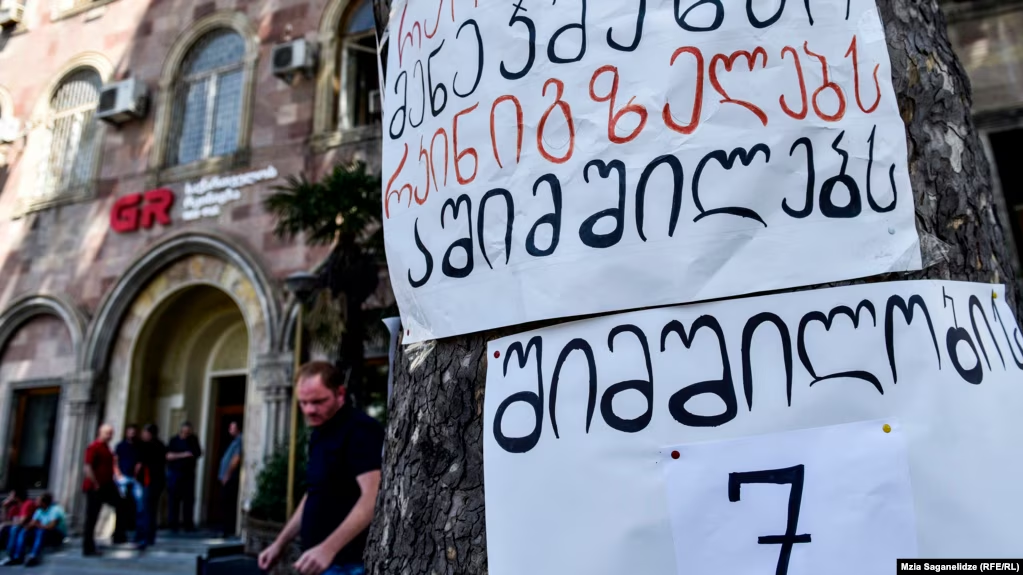
Railway workers’ hunger strike

2017

This AI-generated translation may not be completely accurate.
Railway workers’ hunger strike
On August 14, 2017, railway workers and members of the New Railway Workers’ Union began a hunger strike in front of the Georgian Railway headquarters. They were expressing solidarity with Ucha Gvtisiashvili, an employee who had worked at the railway for 13 years. His workplace and residence were in Gurjaani, but on August 1 he was informed that he had to transfer to Marneuli, which he considered unacceptable. Together with one colleague, he began a hunger strike; eventually, 14 people joined.
The hunger strikers claimed that when their employment contracts were amended, they were not informed about the change in work location — they had only signed documents changing their job titles. They denied being told about new conditions or being offered accommodation or transportation. They argued that, under the same salary, they would have to commute long distances daily.
In response, Georgian Railway stated that it was willing to continue employment with the workers if they accepted the new conditions; otherwise, they would be dismissed. The company had already sent two written warnings to that effect.
On August 15, Vasil Khorava, the head of infrastructure at Georgian Railway, showed journalists the living quarters and workspace in Marneuli that the company was offering to employees relocated from the Kakheti region.
The protesters opposed the change in working conditions and demanded the resignation of the heads of the railway’s public relations and infrastructure departments. Union representatives accused Dachi Tsaguria, head of public relations, of spreading provocative statements and calling the strike “orchestrated,” saying he had lost the right to hold his position. They also demanded Khorava’s resignation, claiming that his department used relocations as a tactic to downsize staff.
The strikers carried signs reading “Railway for the Railway Workers,” “Management Doesn’t Understand Railway Workers,” and “Railway Without Tsaguria.”
Other groups expressed solidarity with the hunger strikers. On August 24, the court rejected the workers’ request to erect a protest tent, so they moved the hunger strike into the department’s lobby. Police prevented this, and according to lawyers and detainees, used excessive force. Ten people were detained, including striking workers and members of the student movement “Auditorium 115.” They were released the following day.
Union members and “Auditorium 115” activists returned to the department on August 29. During the protest, one of the strikers, Merab Targamadze, fell ill, and an ambulance was called. Despite his condition, he continued his hunger strike, switching to a dry fast.
Protesters called on the Georgian government to intervene and initiate negotiations with the railway administration.
After 18 days of protest, on September 1, the New Railway Workers’ Union announced the end of the hunger strike. On their Facebook page, they wrote:
“In recent days, we have all clearly seen the dirty and brutal methods used to bury the genuine and European trade union movement in Georgia once and for all! Therefore, the New Railway Workers’ Union and the striking railway workers declare:
- We are ending the extreme form of protest — the hunger strike;
- We are receiving unprecedented international support and are beginning a legal battle over the existing collective labor dispute both nationally and internationally;
- Together with leaders of sectoral trade union organizations, we are joining the fight for the survival of the trade union movement.”
Seven years later, on December 25, 2024, the New Railway Workers’ Union announced that on November 29, 2024, the Supreme Court had ruled in favor of Ucha Gvtisiashvili, finding Georgian Railway guilty of his unlawful dismissal and awarding him compensation.