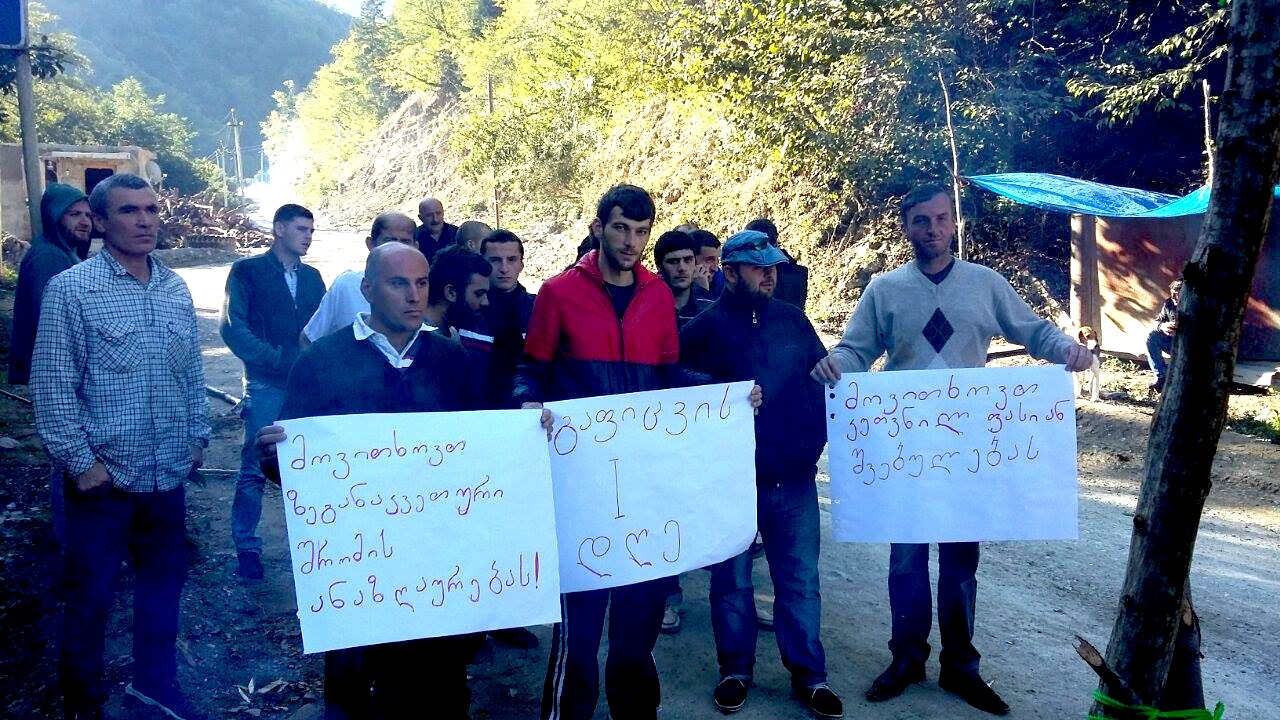
Protest in Zvare

2016

This AI-generated translation may not be completely accurate.
Protest in Zvare
The protest of railway tunnel construction workers in the village of Zvare began on August 9 after two employees were fired. According to one of the workers, during a planned explosion the tunnel filled with dust, and workers briefly exited until it cleared. The fired worker, Mindia Okribelashvili, said their dismissal was punishment for this, prompting solidarity among colleagues who refused to return to work.
The construction was carried out by China Railway 23rd Bureau Group Co., a contractor for Georgian Railways under the railway modernization project. Mediation led by the Ministry of Labour, Health and Social Affairs failed. Although the company initially agreed to workers’ demands, it later backtracked. Around 100 workers began a strike on September 19, demanding improved working conditions, safer environments, and fair treatment.
On September 29 they began picketing near the construction site, blocking equipment. The strike ended on October 4 after an agreement was reached. According to the New Railway Union, local workers signed individual contracts guaranteeing all their demands — including overtime pay, paid leave, one day off per week, and protective clothing.
However, tensions resurfaced on November 2 after company representatives assaulted local residents, accusing them of stealing firewood. The attackers also beat two workers who intervened. Seven people were hospitalized. The next day, workers went on strike again, joined by villagers and union representatives, demanding investigation and the company’s removal from the site.
The Ministry of Internal Affairs arrested three individuals and launched an investigation under Article 118 of the Criminal Code (“intentional infliction of less severe injury”). Despite this, protests continued.
On November 4, civil society groups and student movements organized a solidarity march titled “Workers Beaten with Axes — Everyone to the Streets.” Protesters carried banners reading “No to Business Dictatorship,” “Workers’ Lives Are in Danger,” and “The Company Is Criminal.” Demonstrations began outside British Petroleum’s Tbilisi office on Tsintsadze Street and moved toward Georgian Railways headquarters, which protesters accused of ignoring responsibility for the violence in Zvare.
The strike officially ended on November 9 after the company dismissed those involved in the attacks and construction resumed shortly after.