Protest by Displaced Persons Settled in Tskaltubo

1998

This AI-generated translation may not be completely accurate.
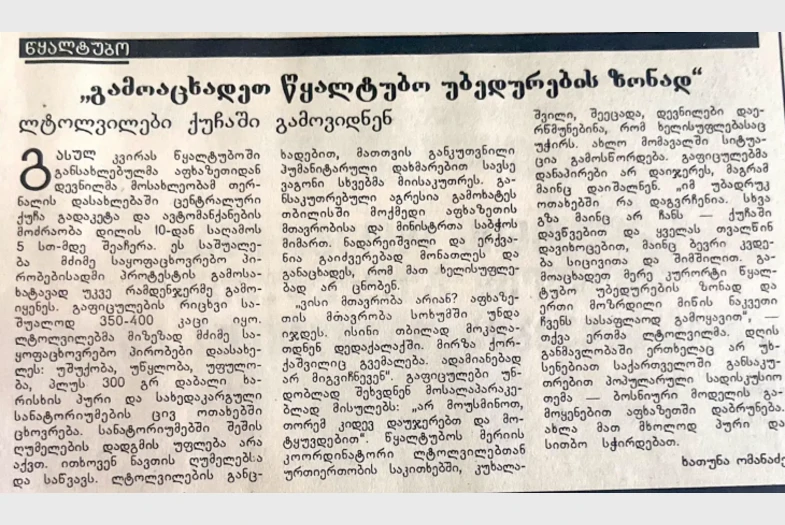
Protest by Displaced Persons Settled in Tskaltubo
In January 1998, displaced persons from Abkhazia (referred to as refugees in the press at the time) staged a protest in the Ternali settlement of Tskaltubo. Around 350–400 people blocked the central street, halting traffic from 10 a.m. until 5 p.m. The demonstrators were protesting unbearable social conditions: no electricity, no running water, no income, only 300 grams of poor-quality bread, and life in the cold, dilapidated rooms of abandoned sanatoriums.
They were not allowed to use wood stoves, so they demanded kerosene heaters and fuel. Protesters also claimed that a train wagon full of humanitarian aid intended for them had been seized by others. Their anger was particularly directed at the Abkhazian government-in-exile and the Abkhazian Council of Ministers in Tbilisi.
Kukhalashvili, the Tskaltubo mayor’s coordinator for refugee affairs, tried to reassure the displaced families that the government was also struggling but would improve conditions soon. Though skeptical, the protesters eventually dispersed. One participant told 7 Dge newspaper: “What else is left for us in those miserable rooms? We’ll lie down in the street and die in front of everyone. Many are already dying from cold and hunger. Then declare Tskaltubo a disaster zone and allocate us a large piece of land to serve as our cemetery.”