“We Can’t Breathe”

2019

This AI-generated translation may not be completely accurate.
“We Can’t Breathe”
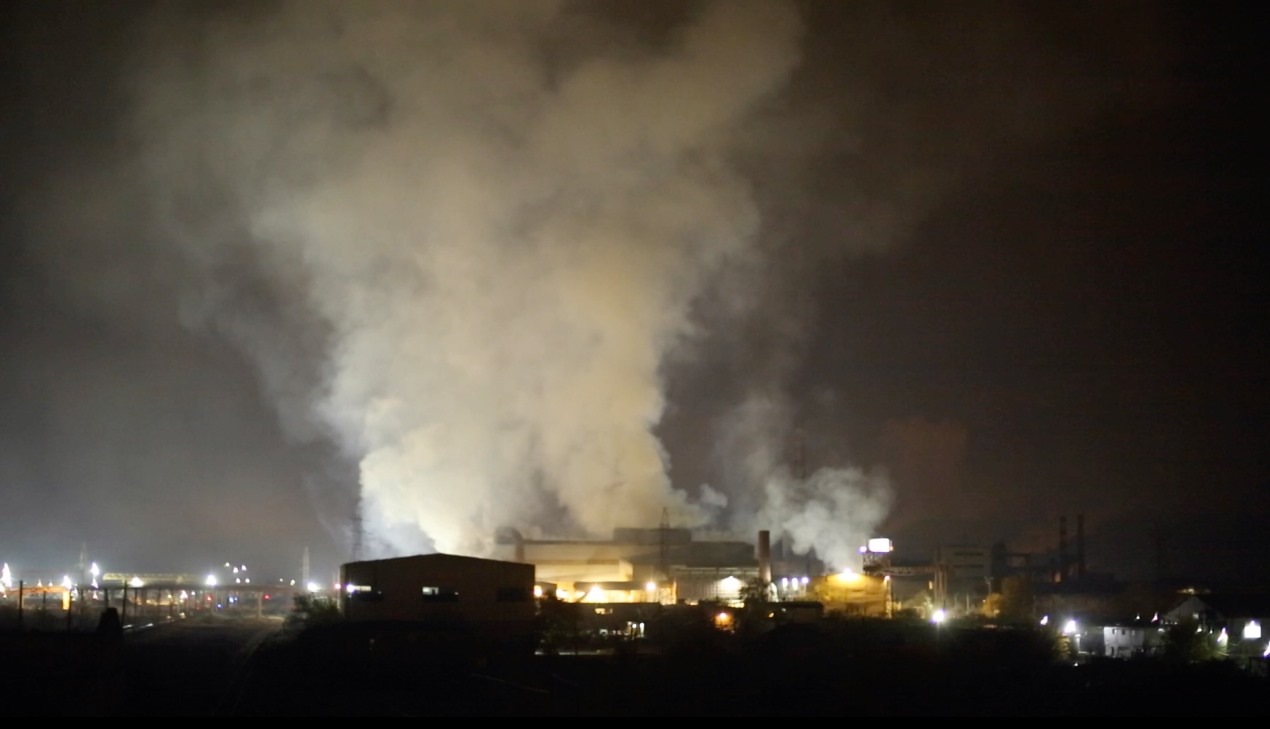
In 2018, a group of young people from Rustavi founded the civic movement “We Can’t Breathe” to advocate for cleaner air and environmental protection in the city. On March 20, 2019, they hung banners on Davit Gareji Street reading, “Geosteel produces cancer and pollutes the air” and “Geosteel is killing us — we can’t breathe.” The metallurgical plant “Geosteel,” which produced rebar, became the focus of their protest because of the visible smoke coming from its chimneys. The activists demanded the installation of air filters and shared data from the national air quality monitoring portal showing dangerously high pollution levels in Rustavi.
One of their first major demonstrations that drew national media attention took place on November 3, 2019. Wearing gas masks, around 150 participants gathered in front of the Rustavi City Hall with posters showing the factory’s emissions and the hashtag #WeCan’tBreathe. Civil activists, doctors, and current and former factory workers spoke at the rally, claiming that cancer rates in Rustavi were higher than in other Georgian cities and directly linked to industrial emissions.
During the rally, protesters circulated a petition demanding that factories align with European production standards, improve filtration systems, ensure safe working conditions, and develop a waste management plan within two months. Movement leader Nikoloz Museridze issued an ultimatum to factory owners to respond to these demands within five days or face “more intense forms of protest.” Afterward, demonstrators drove to the industrial zone and posted protest signs near the factories.
On November 5, Rustavi Mayor Irakli Tabagua summoned representatives of the metallurgical enterprises and warned them that if they did not install filters and reduce harmful emissions, the municipality might organize medical checkups for residents and support lawsuits against the polluters.
The activists sought to raise broader public awareness, painting slogans such as “Killer Metallurgy,” “This Smoke Is Dangerous,” and “Rustavi’s Murderous Factories” around the city.
Fight for legislative change
In June 2020, the Ministry of Environmental Protection and Agriculture registered a draft law “On Environmental Responsibility,” developed in part with input from Rustavi activists. The bill introduced a new accountability mechanism requiring individuals or companies that cause significant environmental damage not only to pay fines but also to carry out specific remediation measures according to a defined plan and timeline. Unlike previous regulations, funds would go directly toward repairing the damage, not into the state budget.
Officials promised to adopt the law during the 2020 spring parliamentary session, but the vote was delayed until autumn, sparking renewed protests.
On July 13, 2020, activist Giorgi Tkemaladze taped a paper reading “I Can’t Breathe” on the door of the parliamentary environmental committee in protest and was fined for it. The following day, members of the movement staged another silent demonstration in Rustavi near the site where Prime Minister Giorgi Gakharia and Economy Minister Natia Turnava were inaugurating a new textile factory, holding signs reading “Danger Zone,” “Warning! Bad Air,” and “Ecology Is Non-Negotiable.”
The government continued to postpone adoption of the law, so the protests resumed. On February 13, 2021, activists gathered again in Rustavi’s central square, threatening a larger demonstration if Parliament failed to pass the environmental responsibility bill by March 4.
Activist Tinatin Magedani said that “the air quality in Rustavi is catastrophically poor, which is confirmed by official data — over 14,000 tons of harmful dust were emitted last year, and for 281 days out of 365, we were breathing bad or very bad air.”
Although large-scale mobilization proved difficult, “We Can’t Breathe” found creative ways to keep the issue in the public eye. Starting in 2020, they organized guided “pollution tours” for citizens, taking groups to industrial zones to witness firsthand the environmental damage caused by factories.
The Georgian Parliament finally adopted the “Environmental Responsibility Law” on March 2, 2021. Afterward, Rustavi activists continued their efforts to ensure its enforcement.