Emergency doctors’ hunger strike

2013

This AI-generated translation may not be completely accurate.
Emergency doctors’ hunger strike
Five emergency medical doctors were dismissed from their positions on March 7. The head of the Emergency Medical Service, Kakha Chikhradze, cited two main reasons for their dismissal: the expiration of their employment contracts and their failure to report for duty, as well as their attempt to organize a strike.
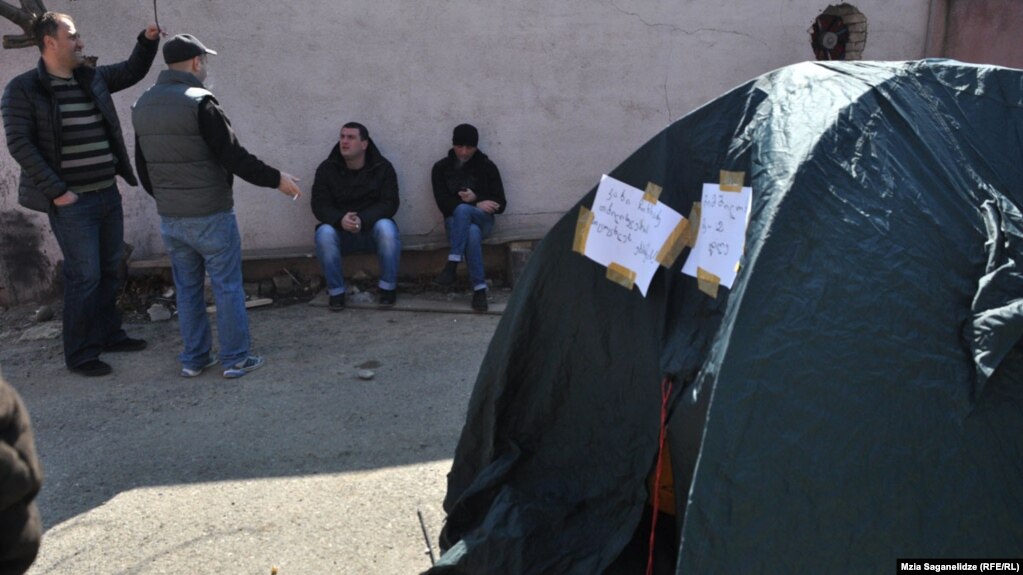
The dismissed doctors began a hunger strike on the same day, convinced that Chikhradze had fired them in retaliation for their public criticism of him.
On the fifth day of the hunger strike, March 11, other doctors joined their dismissed colleagues in solidarity. They held a protest in the courtyard of the Gldani-Nadzaladevi Emergency Management Service, where the hunger strikers had set up tents. The protesting doctors voiced several demands: a reasonable rest period during shifts, an increase in the number of ambulance crews, and the reinstatement of the dismissed doctors.
“An ambulance is supposed to arrive within 11–15 minutes, but when it takes two or three hours, it can hardly be called ‘emergency’ anymore. The reason is that there are too many calls and not enough crews, or it’s simply poor management,” said one of the protesters.
At first, the newly elected Georgian Dream government did not question Kakha Chikhradze’s decision to dismiss the doctors. However, the situation soon changed — the Minister of Health summoned Chikhradze, Tbilisi City Hall’s head of the Social Services Department, Mamuka Katsarava, and representatives of the parliamentary Health Committee for a meeting. Following this meeting at the Ministry of Health, a six-point action plan was drafted to address the crisis and proposed to the doctors as a way to resolve the situation.
On March 14, the dismissed doctors ended their hunger strike after learning that Kakha Chikhradze had been removed from his position. They stated that they would continue to fight for their rights through legal means.
According to Mamuka Katsarava, head of Tbilisi City Hall’s Department of Social Services and Culture, a new consultative and management council would work to address the ongoing problems within the emergency medical system. He explained that the council would include two representatives from the City Hall and three from the Ministry of Health.
This 2013 protest by emergency medical doctors in Tbilisi highlighted broader systemic challenges in Georgia’s healthcare system, including overwork, understaffing, and management inefficiencies, prompting public debate about labor rights and accountability in public health institutions.