Demonstration against the dismissal of lecturers on political grounds

2012

This AI-generated translation may not be completely accurate.
Demonstration against the dismissal of lecturers on political grounds
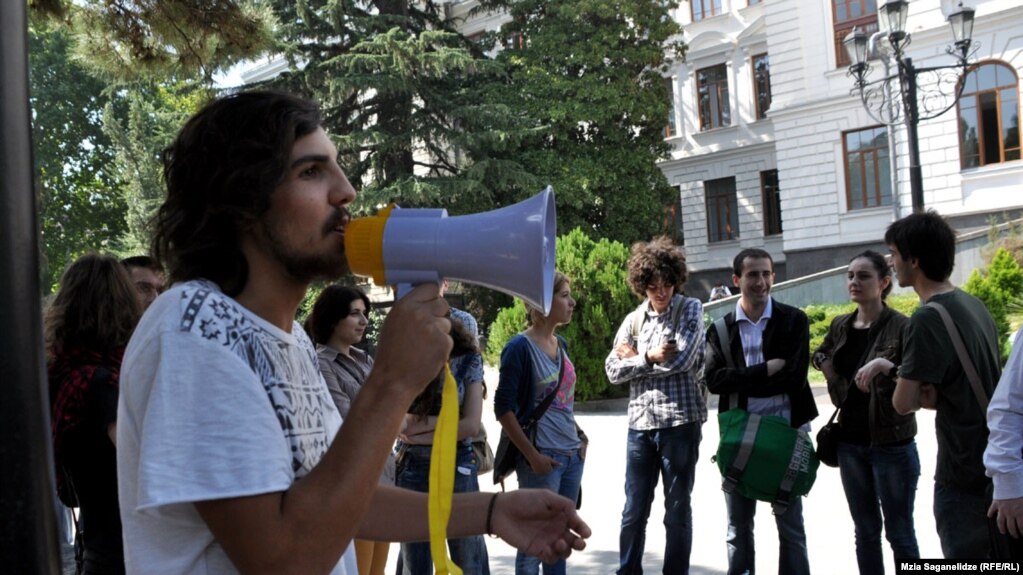
On September 5, 2012, protesters gathered in front of Ivane Javakhishvili Tbilisi State University to protest the dismissal of gender specialist and lecturer Lela Gaprindashvili. She taught at the Faculty of Social and Political Sciences. According to students, Gaprindashvili had openly expressed political views critical of the government, which led to her dismissal.
Along with Lela Gaprindashvili, other lecturers critical of the authorities — Nodar Khaduri and Davit Narmania — were also dismissed from the university. Their contracts had expired, and they were unable to win reappointment in the new competition.
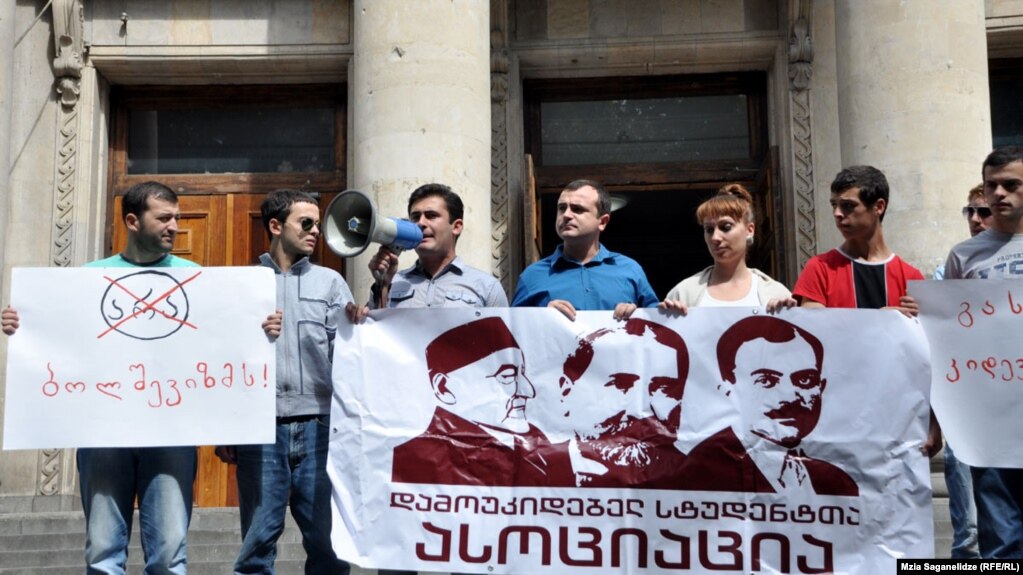
On September 11, students held another protest against what they saw as politically motivated dismissals. They called on both students and lecturers to resist injustice. The main slogans were “No to Bolshevism,” “Education Without Politics,” and “How many more will be fired?” Students from other universities also joined the protest, which was organized by the Independent Student Association. Its chair, Aleksandre (Lekso) Kobaidze, said he had no doubt the dismissals were politically motivated.
Gaprindashvili said that the university administration had been uncomfortable with her previous public support for students who had protested against poor access to Georgian-language learning materials and against violence by student self-government members. “I stood with the students,” she said, “and that was something the administration didn’t like.”
In response, the university issued a statement denying any political motivation: “Tbilisi State University has no information about Lela Gaprindashvili’s political activities and has never been interested in such matters. Therefore, the claim that she was dismissed for political reasons is entirely baseless.”
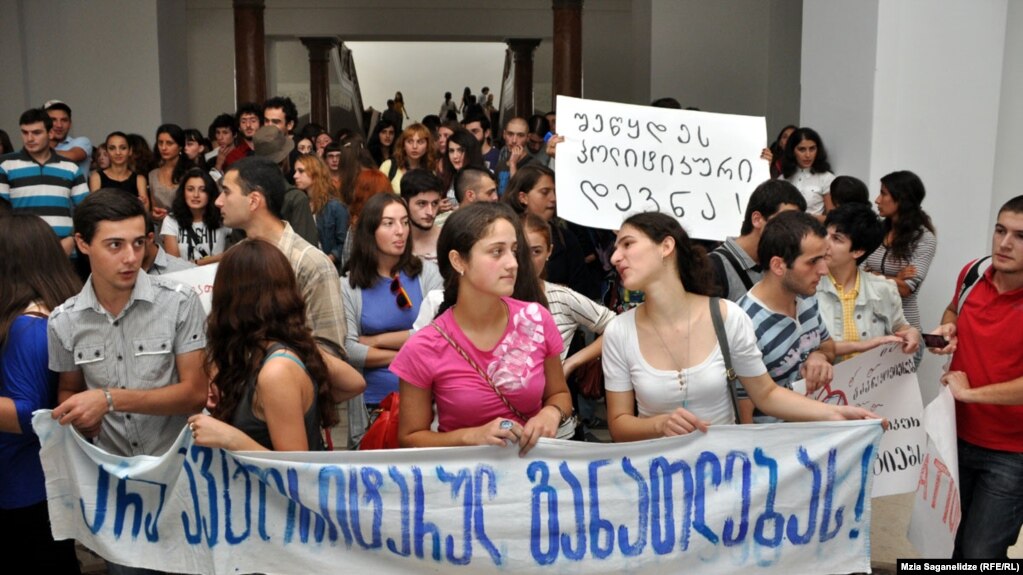
From September 14, the protests were led by the student group “Laboratory 1918.” That day, students from other universities joined in. A manifesto circulated on social media demanded the protection of both students’ and lecturers’ rights. The rally began in the university garden and then moved inside the main building, where students demanded a meeting with the rector. Rector Aleksandre Kvitashvili did not appear, so students chanted their demands in the foyer and outside the administration office.
By September 17, dozens of students gathered again near the rector’s office, shouting and stamping their feet:
“Fear us! Fear us! Fear us! Bring out the rector!”
Kvitashvili eventually came out of his office. The first student demand was to hold a public meeting in the main assembly hall, but that did not happen. Instead, a tense exchange took place in the corridor, with students shouting, “Stop lying to us!”
Chanting “Join us!”, students began marching through the university corridors after the rector refused to meet their demands — which included the reinstatement of politically dismissed lecturers, the dissolution of the Regents Council, and full university autonomy.
The Regents Council had been created by government decree in 2011 to coordinate higher education policy. It was composed of senior officials from the Ministries of Justice, Economy, Finance, and Education.
Inside the main assembly hall, protest organizers from “Laboratory 1918,” including social and political sciences student Levan Lortkipanidze, addressed the crowd: “All our demands come down to one — autonomy for the university. Power here is concentrated in the hands of government-appointed officials. We want the same system as in Europe and the U.S., where power belongs to students and lecturers.”
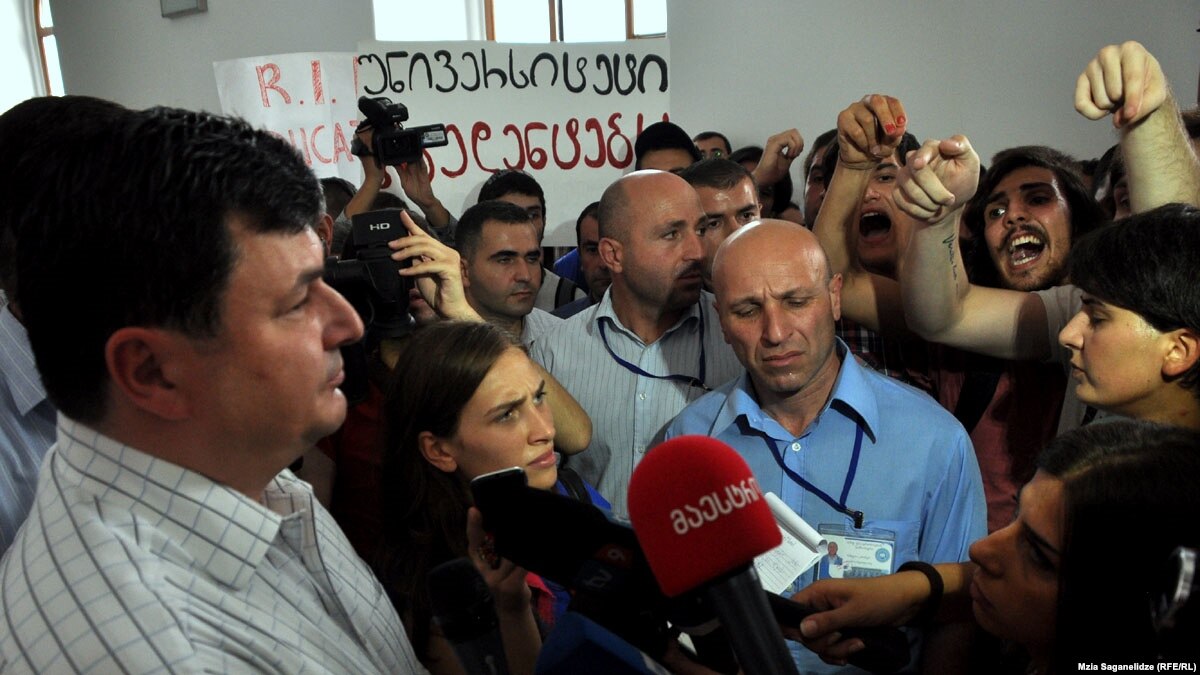
Rector Kvitashvili responded privately in his office, speaking only to journalists. He refused to meet students in the hall and said the Regents Council could not be dissolved, nor could dismissed lecturers be reinstated, since “they were not dismissed for political reasons.”
Similarly, Andro Barnovi, the newly appointed dean of the Faculty of Social and Political Sciences and former Deputy Minister of Defense, stated that Gaprindashvili was dismissed because she failed to submit a complete syllabus. Protesters confronted Barnovi outside his office in the university’s sixth building.
The protests over this issue soon ended, as on the next day — September 18 — the “prison abuse videos” were released to the public, sparking nationwide outrage and mass demonstrations that overshadowed all other events.