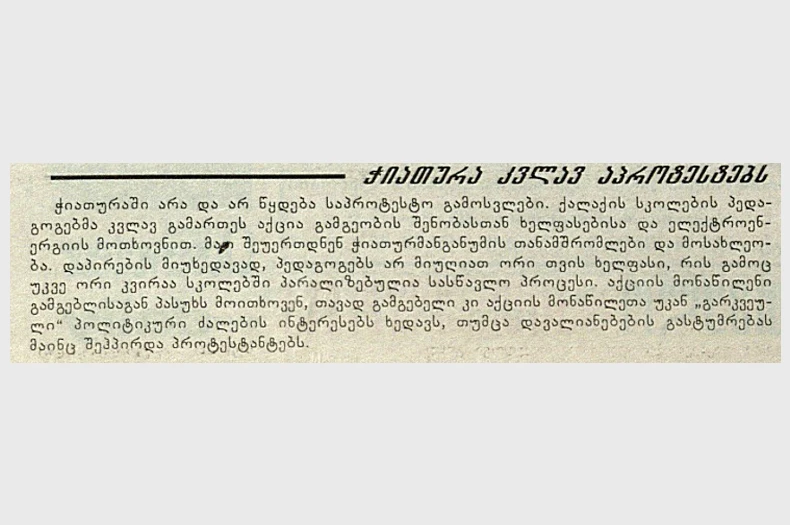
Chiatura teachers’ strike

2001

This AI-generated translation may not be completely accurate.
Chiatura teachers’ strike
In April 2001, teachers in Chiatura went on strike, halting the learning process in schools for two weeks. They gathered in front of the local administration building, demanding their unpaid salaries as well as a stable supply of electricity. By that time, teachers had not received their wages for two months. Their protest soon gained broader support, as Chiaturmanganese workers and local residents joined in solidarity. Demonstrators insisted on clear answers from the district governor, who claimed that the strike was driven by the interests of “certain political groups,” yet still promised that the salary arrears would be covered.
This protest in Chiatura highlighted the ongoing struggles of Georgian teachers in the early 2000s, reflecting the wider social and economic hardships caused by wage delays and energy shortages. Such strikes and demonstrations were common during this period, as educators and workers demanded accountability and basic living conditions.