Adjara Revolution

2004

This AI-generated translation may not be completely accurate.
Adjara Revolution
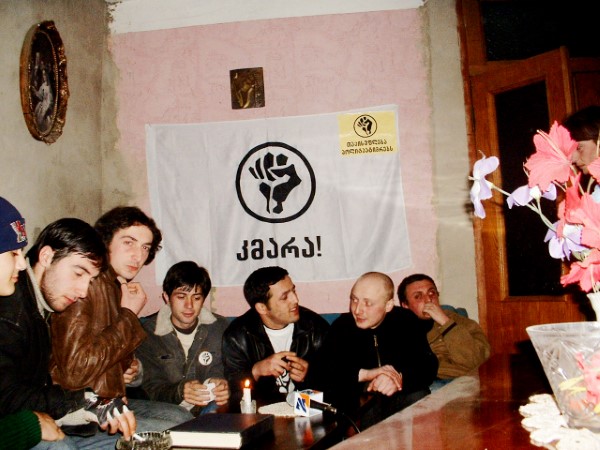
After the Rose Revolution brought a new government to power in Georgia, the Kmara movement and Our Adjara began organizing protests demanding the resignation of Aslan Abashidze, the authoritarian leader of the Autonomous Republic of Adjara, who maintained near-total control over the region.
On January 6, 2004, several Kmara activists were arrested for 10 days for putting up anti-Abashidze posters. A few days later, police violently dispersed a protest in Gonio, where hundreds of villagers attempted to raise the five-cross Georgian flag over the local administrative building. Just days after the incident, on January 14, the flag was officially adopted as Georgia’s new national flag. The Gonio protests were again broken up on January 19.
In response to the growing opposition movement, Abashidze’s administration organized pro-government rallies in Batumi—first on January 20 and again on January 25—where his supporters clashed verbally with protesters.
On February 20, police raided the offices of opposition movements in Batumi after another anti-Abashidze demonstration. The next day, two Kmara activists were brutally beaten near Choloki while carrying posters criticizing Abashidze.
On March 12, Abashidze announced that a state of emergency was in effect in Adjara, banning all protests. Two days later, on March 14, Georgian President Mikheil Saakashvili was denied entry to the region—armored vehicles and armed men blocked him near Choloki. Saakashvili said his visit was simply to meet voters ahead of the March 28 parliamentary elections, while Abashidze’s government accused Tbilisi of attempting to deploy troops in Adjara under the pretext of the president’s visit. Saakashvili denied this, saying he was accompanied only by his security detail.
At that time, Abashidze was in Moscow, where he accused the central government of plotting to overthrow him by force. In response, Saakashvili issued an ultimatum, demanding Abashidze meet several conditions, including holding free and fair elections, appointing a presidential representative in Adjara, and collecting illegally distributed weapons. In exchange, the Georgian government lifted recently imposed economic sanctions on the region.
Although the state of emergency declared in early March was lifted on March 27, Abashidze reinstated it—and imposed a curfew—on April 24. Using the emergency as justification, riot police violently dispersed a protest organized by Our Adjara in central Batumi on April 30, injuring several people. Protesters were demanding the release of political prisoners held by Abashidze’s regime.
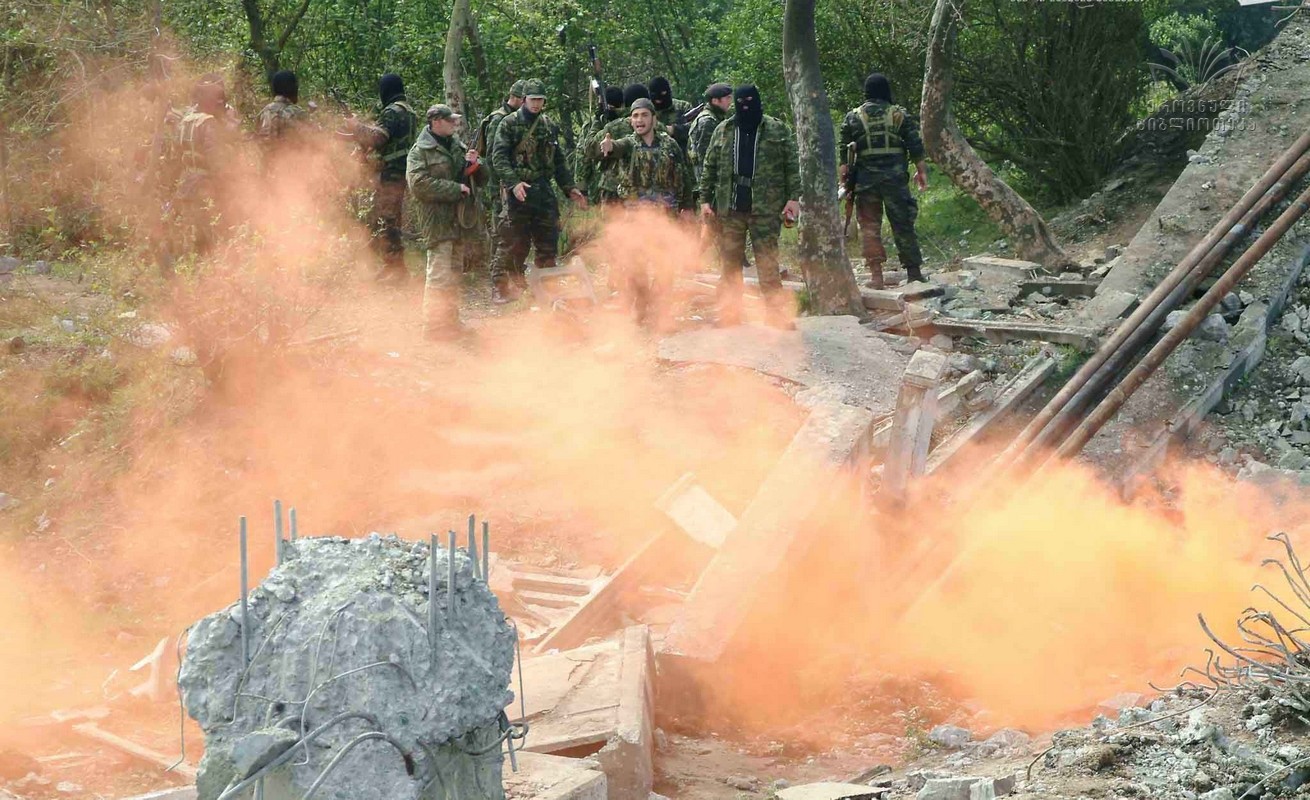
By early May, protests demanding Abashidze’s resignation became continuous, joined by university students and local residents. On May 2, Abashidze ordered the demolition of the Kakuti and Choloki bridges connecting Adjara with the rest of Georgia, claiming it was for “defensive purposes.” Two days later, on May 4, police again dispersed a rally in Batumi using water cannons and batons. According to Our Adjara, 50 people were injured, six of them seriously. The movement’s office was also ransacked.
The Georgian parliament condemned Abashidze’s actions and demanded his “unconditional resignation.” Later that day, thousands gathered near Batumi University in protest. The rally continued overnight as most of Adjara’s police forces defected, pledging loyalty to President Saakashvili and joining the demonstrators. On May 5, journalists at Adjara TV went on strike, announcing their support for the protests. Prime Minister Zurab Zhvania and protesters from Tbilisi arrived in Batumi to show solidarity.
On May 5, Russian Security Council Secretary Igor Ivanov flew to Batumi to mediate talks with Abashidze. The next day, May 6, 2004, Aslan Abashidze resigned and fled to Moscow. “Aslan has fled—Adjara is free,” President Mikheil Saakashvili declared, calling it Georgia’s “second bloodless revolution.”